
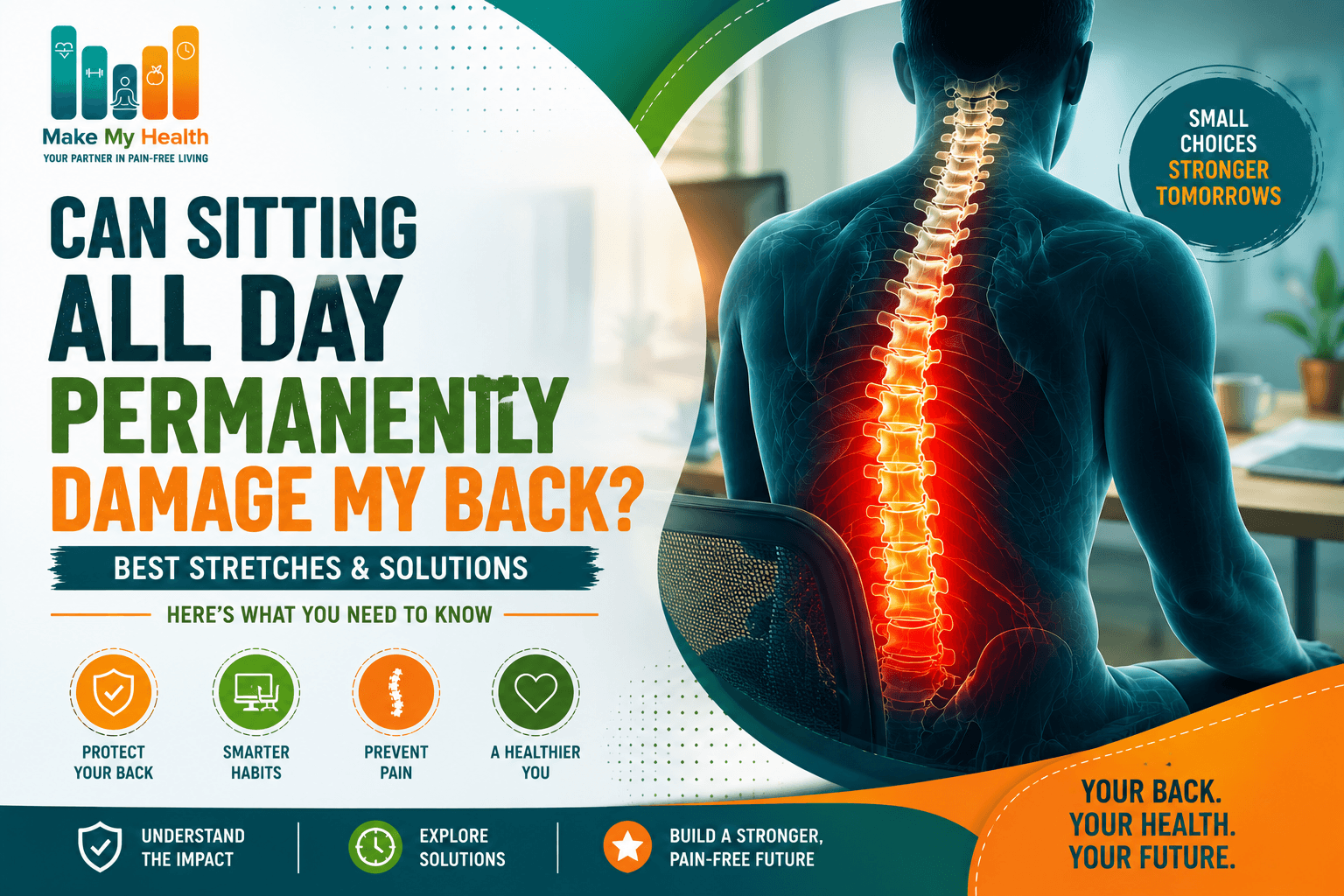
Can Sitting All Day Permanently Damage My Back? Best Stretches & Solutions
DisclaimerThis article is for general educational purposes and is not a substitute for professional medical advice, diagnosis, or treatment. Always consult a qualified healthcare provider for guidance specific to your condition.
Is your daily desk routine quietly sabotaging your spine, and could a few simple changes save you from a lifetime of back pain?
Introduction
Let’s face it our entire modern world seems designed to keep us parked in a chair. From endless commutes to marathon Zoom meetings and even our “relaxing” Netflix binges, we're spending stunning amounts of time glued to our seats. But here’s the scary truth: a catastrophic 80% of adults will experience back pain at some point in their lives. So, the big question is: Can sitting all day actually leave your back with permanent damage? And if so, what can you do to fight back?
In this blog, we’ll dig into the gripping science behind prolonged sitting, expose the risks it poses to your precious spine, and most importantly, share the best back-saving stretches and solutions to keep you moving, healthy, and pain-free for the long haul.
1. The Science Behind Sitting and Back Health
1.1 How Prolonged Sitting Impacts the Spine
Imagine your spine as a stack of delicate building blocks, all working together to hold you upright. Now, picture the relentless crushing force when you sit for hours on end-lumbar disc pressure actually skyrockets by up to 40% compared to standing. Over time, this can trigger devastating disc degeneration, especially if you’re slouching.
But the damage isn’t just about pressure. Extended sitting also means:
- Blood flow to spinal tissues drops dramatically
- Hip flexors and hamstrings become ruthlessly tight
- Core and gluteal muscles grow shockingly weak
Put all these together, and you've got a recipe for spinal chaos alignment goes off the rails, inflammation kicks in, and pain becomes almost inevitable.
1.2 Common Back Problems Linked to Sitting
The connection between a sedentary lifestyle and back problems isn’t just a hunch, mountains of research back it. Check out this table for some of the most common (and downright dangerous) issues:
| Back Problem | Description | Prevalence (%) |
|---|---|---|
| Herniated Discs | Disc material is forced out of position | 5–20% |
| Muscle Imbalances | Weak core, tight hips/lower back | 60–70% |
| Sciatica | Nerve pain shooting down the leg | 10% |
| Chronic Low Back Pain | Persistent agony for over 12 weeks | 23% |
Here’s a jaw-dropping stat: back pain is the #1 cause of disability worldwide, leading to a mind-blowing 264 million lost workdays every year in the U.S. alone.
2. Can Sitting All Day Cause Permanent Damage?
2.1 What “Permanent Damage” Really Means
When we talk about “permanent damage,” we’re getting into serious territory. This means changes to your spine or surrounding tissues that just can’t be reversed no matter how many stretches, doctor visits, or therapies you try. Think:
- Degenerative disc disease
- Chronic nerve compression
- Structural disasters in spinal alignment
But let’s clear up a common myth: while sitting all day can absolutely fuel your risk of these issues, most “permanent damage” comes from a toxic mix of factors bad posture, lack of movement, genetics, and sometimes, a nasty injury.
2.2 Scientific Evidence: What Studies Show
Here’s the cold, hard truth from the science world: a 2019 meta-analysis (over 34,000 people!) found that sitting for more than 7 hours a day boosts your risk of chronic lower back pain by a whopping 32% compared to sitting less than 4 hours.
MRI scans add more drama people with desk-bound jobs are more likely to show early disc degeneration: discs shrink, lose hydration, and become vulnerable to injury. The good news? These changes are usually slow and sneaky, so if you catch them early and take action, you can halt or even partially reverse the damage.
2.3 Individual Risk Factors
Not everyone who sits for marathon sessions is doomed. But your risk skyrockets if you have:
- A toxic, non-ergonomic workspace (no lumbar support? Yikes!)
- Pre-existing spinal conditions
- A high BMI (over 30)
- Minimal physical activity (less than 150 minutes a week)
Bottom line: sitting isn’t an instant death sentence for your back, but in the presence of these risk factors, it’s a dangerous trap.
3. Warning Signs: When Sitting Is Harming Your Back
3.1 Early Symptoms to Watch For
Catch the warning signs early before a minor ache turns into a nightmare! Here’s what to look out for:
- A dull, relentless ache in your lower back after sitting
- Stiffness when you try to stand
- Tingling or numbness in your legs or feet (red flag!)
- Sharp pain when you bend or move
Ignoring these? That’s a risky gamble with your long-term health.
3.2 When to Seek Professional Help
If you notice any of the following, don’t mess around; see a healthcare professional immediately:
- Pain that lasts more than 6 weeks
- Numbness, weakness, or trouble with bladder/bowel control (medical emergency!)
- Pain shooting down your leg (classic sciatica)
- Difficulty standing or walking
Early diagnosis can literally save you from permanent agony.
4. Ergonomics: Setting Up Your Workspace for Spinal Health
4.1 The Ideal Sitting Posture
Forget the myth of the “perfect” posture, your best position is your next position. But here are battle-tested guidelines to slash your spinal stress:
| Element | Recommendation |
|---|---|
| Chair height | Feet flat, or on a footrest |
| Hip-knee angle | Hips slightly above knees (100–110°) |
| Back support | Lumbar support at the lower back’s natural curve |
| Desk height | Elbows at 90–100°, forearms parallel to the floor |
| Screen position | Top of screen at/just below eye level, 18–24” away |
4.2 Essential Ergonomic Tools
Investing in ergonomic gear is a game-changer! Here’s what can make a sensational difference:
- Adjustable chairs with real lumbar support ($150–$1200)
- Standing desks or desk converters ($200–$600)
- Footrests and keyboard trays ($25–$150)
- External monitors and laptop stands
A 2021 survey found that ergonomic setups slashed musculoskeletal complaints by a spectacular 54% in just three months.
5. Best Stretches for Counteracting Sitting
5.1 Why Stretching Matters
Stretching isn’t just about feeling good, it’s about restoring balance to your body. Muscles that get tight or weak from sitting all day can be loosened, reactivated, and revitalized with regular stretching (aim for at least 2–3 times a day).
5.2 Top 7 Stretches for Desk Workers
Ready to give your body a miracle reset? Here are the most powerful stretches step by step.
1. Seated Spinal Twist
- Sit tall, feet flat.
- Place right hand on chair back.
- Twist torso right, hold 20–30 seconds.
- Repeat left.
2. Hip Flexor Stretch
- Stand, step right foot back into a lunge.
- Keep torso upright, tuck hips under.
- Hold 30 seconds, switch.
3. Cat-Cow Stretch
- On hands and knees, arch up (cat), dip down (cow).
- Repeat 10 reps.
4. Chest Opener
- Clasp hands behind back.
- Lift arms, open chest.
- Hold 20–30 seconds.
5. Standing Forward Fold
- Stand, feet hip-width apart.
- Hinge at hips, fold forward.
- Let head/arms hang, hold 30 seconds.
6. Piriformis Stretch
- Sit, cross right ankle over left knee.
- Lean forward, feel glute stretch.
- Hold 20–30 seconds, switch.
7. Neck Stretch
- Sit/stand tall.
- Tilt head to side, ear to shoulder.
- Hold 20 seconds, repeat other side.
5.3 Stretching Schedule: How Often Is Enough?
Consistency is your secret weapon. Research says: stand and stretch every 30 minutes, but at least do a full stretch session every 2 hours. Here’s a cheat sheet:
| Time Interval | Action |
|---|---|
| Every 30 min | Stand and walk 2–3 min |
| Every 2 hrs | Complete full stretch set |
| Lunch break | Brisk 10-min walk |
6. Movement Breaks: Simple Solutions for All-Day Sitters
6.1 Microbreaks: The 60-Second Reset
Don’t underestimate the power of a quick movement break. Microbreaks of just 60 seconds can dramatically lower back and neck pain. In one study, workers who did this every hour saw pain drop by 21%!
Try these:
- March in place (1 minute)
- Shoulder rolls (10 reps)
- Standing side bends (10 each side)
6.2 Desk Exercises That Work
No gym? No problem! Hit these:
- Seated leg extensions: Straighten each leg, hold 5 sec, 10 reps/leg.
- Calf raises: Stand, lift heels, 15–20 reps.
- Wall push-ups: Hands on wall, 10 push-ups.
6.3 The 20-8-2 Rule
A super-simple rhythm to break up your sitting:
| Activity | Duration (per 30 min) |
|---|---|
| Sitting | 20 min |
| Standing | 8 min |
| Moving (walking/stretching) | 2 min |
Stick to this all day, and you’ll rack up 128 minutes standing and 32 minutes moving a massive upgrade from sitting for 480 minutes straight!
7. Long-Term Solutions: Building a Back-Healthy Lifestyle
7.1 Exercise Recommendations
Here’s the ultimate antidote to sitting: consistent movement. The World Health Organization recommends at least 150 minutes of aerobic exercise (think brisk walks, cycling) a week, plus two strength sessions.
Jaw-dropping fact: People who meet these guidelines slash their chronic back pain risk by 45%.
7.2 Strengthening the Core
A strong core is your spine’s best friend, your natural “back brace.” Add these to your routine 2–3 times a week:
| Exercise | Sets | Reps |
|---|---|---|
| Planks | 3 | 30 sec |
| Bird-Dogs | 3 | 10/side |
| Glute Bridges | 3 | 15 |
| Dead Bugs | 3 | 10/side |
7.3 Monitoring Progress
Tracking your habits is a powerful motivator. Use a journal or app to log:
- Daily sitting hours
- Stretching/exercise routines
- Pain levels (1–10 scale)
- Ergonomic upgrades
Check your log weekly if pain isn’t improving, it’s time for a course correction.
8. When Sitting Is Unavoidable: Coping Strategies for Special Circumstances
8.1 Long Commutes
Stuck in traffic for hours? Don’t let it wreck your back:
- Adjust car seat for lumbar support (a cushion works wonders)
- Stop every 60–90 minutes for a quick stretch
- Do seated marches or ankle circles if you’re stuck
8.2 Air Travel
Long flights can be vicious on your back (and even hike your risk for blood clots):
- Stand and walk the aisle every hour
- Stretch calves/hamstrings right in your seat
- Bring a travel lumbar pillow
8.3 Disabilities and Limited Mobility
If standing isn’t possible, you’re not out of options:
- Do upper body stretches and neck rolls
- Use pressure-relieving cushions ($30–$150)
- Get a physical therapist’s insight for a personalized plan
9. Myths & Misconceptions About Sitting and Back Pain
9.1 Myth #1: “If I Have a Good Chair, I Can Sit All Day Safely.”
Fact: Even the best chair can’t save you from the dangers of sitting, movement is irreplaceable.
9.2 Myth #2: “Standing Desks Prevent Back Pain.”
Standing desks can help, but they’re not a miracle cure. Too much standing brings its own pain. The magic is in switching positions often.
9.3 Myth #3: “Back Pain Is Inevitable With Age.”
Not true! While aging is a factor, your daily choices, especially how much you sit, have a massive impact. You can defy the odds with regular activity and good ergonomics.
9.4 Myth #4: “Exercise Alone Can Undo the Harm of Sitting.”
Exercise is crucial but not a get-out-of-jail-free card. Even active people who sit for 8+ hours face increased health risks. Consistency and movement throughout the day are key.
Conclusion:
Prolonged sitting is a major, yet often underestimated, contributor to back pain and potential spinal problems. While not everyone who sits for long hours will suffer permanent damage, the risks are real, especially when compounded by poor posture, limited movement, and other factors. Thankfully, making simple ergonomic adjustments, incorporating regular stretches, and prioritizing movement breaks can significantly reduce discomfort and safeguard your back. Ultimately, the key is consistency: small, frequent changes add up to lasting spinal health. Your back will thank you for every move you make.
Remember: Your back deserves sensational care. Don’t let a chair become your prison, get moving and unlock a future free from pain! Take our free Back Pain Assessment.
Get a personalized recovery plan in the Make My Health app.
Final Thoughts
Our world may be built for sitting, but you don’t have to accept back pain as your fate. With bold action, smart ergonomics, powerful stretches, and regular movement, you can reclaim your spinal health and live pain-free. So stand up, stretch it out, and take control of your back’s destiny starting today!
FAQ:
-
How many hours of sitting per day is considered “too much”?
Most research points to 7–8 hours as the threshold where risk increases, and breaking up sitting every 30 minutes is strongly recommended. -
Can sitting cause sciatica?
Yes, prolonged sitting, especially with poor posture, can compress the sciatic nerve and trigger radiating leg pain. -
Are standing desks worth the investment?
For many people, yes. Standing desks help reduce total sitting time, but alternating between sitting and standing is most beneficial. -
How long does it take to improve back pain from sitting?
Mild cases often get better in 2–4 weeks with regular stretching and movement. Chronic cases? It can take months and might need pro help. -
What’s the single most important thing I can do for my back if I have to sit?
Move more, aim for a standing or walking break every 30 minutes. No fancy equipment needed, just stick with it!
Stay updated
Get new health articles on WhatsApp
By subscribing, you agree to receive health updates via WhatsApp. Unsubscribe anytime.