
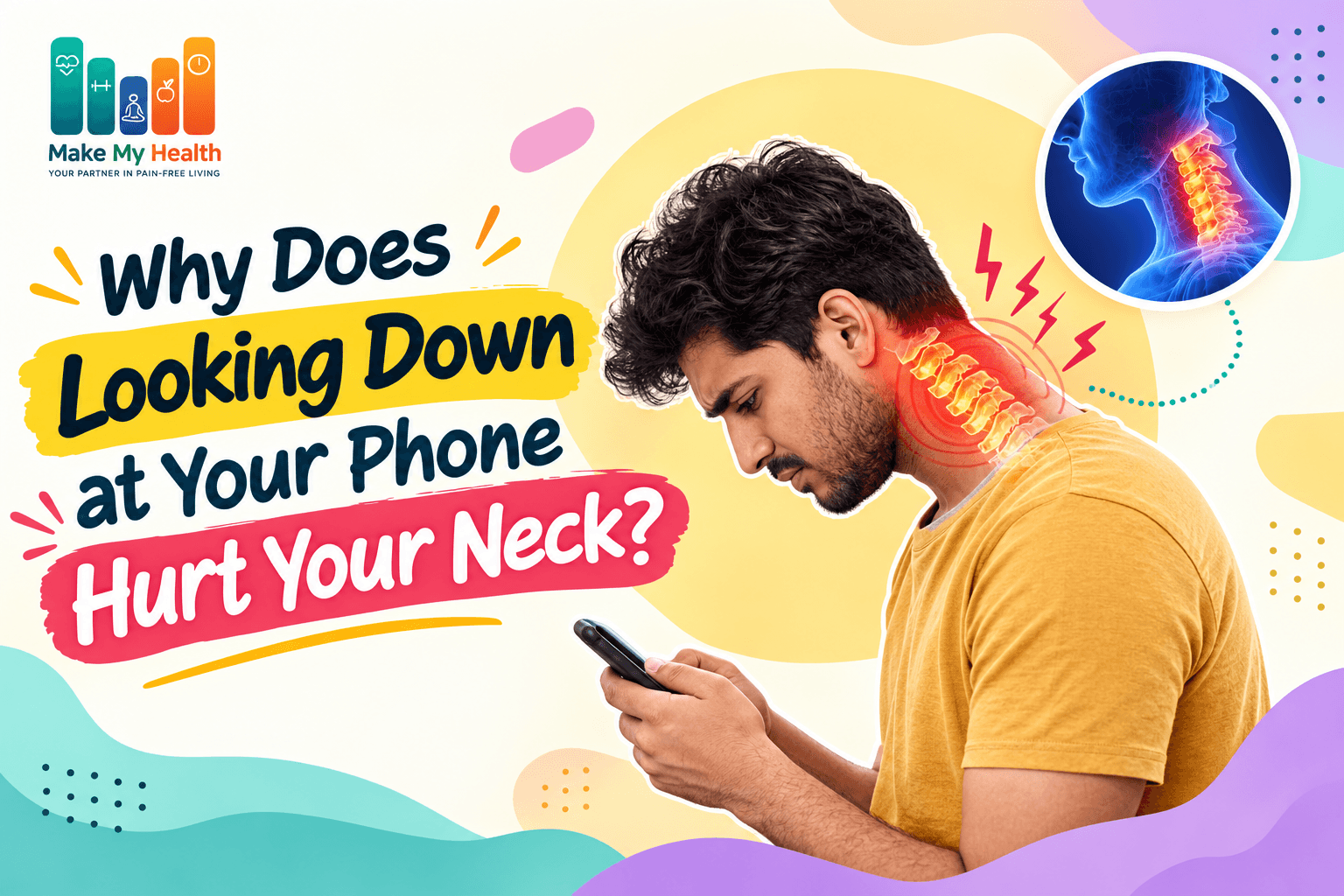
Why Does Looking Down at Your Phone Hurt Your Neck?
DisclaimerThis article is for general educational purposes and is not a substitute for professional medical advice, diagnosis, or treatment. Always consult a qualified healthcare provider for guidance specific to your condition.
Is your smartphone turning your neck into a ticking time bomb for pain and injury?
Understanding the Mechanics: How Looking Down Affects the Neck
Ever wondered why your neck feels achy after scrolling through your phone? It’s not just your imagination there’s some jaw-dropping science behind it. Your head weighs about 10–12 pounds when you’re sitting up straight. But the moment you tilt your head forward, even a little, things get intense fast. At just a 15-degree tilt, your neck is suddenly supporting 27 pounds. By 30 degrees, that weight balloons to about 40 pounds. Imagine lugging around a small child on your neck all day sounds agonizing, right? The more you tilt, the more you force your neck muscles and vertebrae into overdrive.
The Role of Posture: Forward Head Syndrome
Let’s talk about posture. “Text neck” is the catchy nickname for forward head posture, and it’s become a modern epidemic thanks to our phones. When your head creeps forward past your shoulders, your cervical spine gets hammered with extra pressure. Over time, this relentless strain can lead to muscle fatigue, stiffness, and even long-term spinal misalignment. Research shows that people glued to their phones for more than four hours a day report a whopping 60% increase in neck pain compared to those who spend less time scrolling. It’s a real-life nightmare for your spine.
Step-by-Step: What Happens to Your Neck When You Look Down
So, what’s actually going on inside your neck when you’re staring down at your screen? Here’s a quick breakdown:
- Initial Tilt: You lower your chin, and your upper cervical vertebrae flex forward.
- Increased Load: Every 15-degree tilt piles on more weight. At 45 degrees, your neck is supporting up to 49 pounds.
- Muscle Strain: Neck and upper back muscles contract to hold up the extra load, leading to relentless fatigue.
- Disc Compression: The intervertebral discs get squished unevenly, boosting your risk for herniation.
- Reduced Blood Flow: Muscles that stay contracted for too long can strangle blood flow, causing discomfort and eventually, pain.
Comparing Neutral vs. Phone Use Neck Positions
Check out this table for a quick look at how different head positions affect your neck:
| Head Position | Average Weight on Spine (lbs) | Common Symptoms |
|---|---|---|
| Neutral (0° tilt) | 10–12 | Minimal discomfort |
| 15° Forward Tilt | 27 | Mild stiffness |
| 30° Forward Tilt | 40 | Soreness, fatigue |
| 45° Forward Tilt | 49 | Persistent pain |
| 60° Forward Tilt | 60 | Severe discomfort |
Even a slight tilt can unleash a cascade of pain and injury, turning a simple habit into a devastating health risk.
Long-Term Effects: Beyond Immediate Discomfort
It’s tempting to shrug off a little neck pain, but the consequences can be sinister if you don’t change your habits. Over months or years, chronic poor posture can trigger:
- Chronic Neck Pain: Muscle tension that refuses to quit.
- Degenerative Disc Disease: Excessive pressure speeds up the wear and tear on your spinal discs.
- Nerve Compression: Misalignment can pinch nerves, sparking tingling or numbness in your arms.
- Headaches: Neck tension often triggers cervicogenic headaches.
These symptoms aren’t just annoying they can sabotage your daily life, productivity, and even steal your sleep.
Prevention: Steps to Protect Your Neck
Don’t let your phone become a trap for your neck. Here’s how you can fight back:
- Raise Your Device: Hold your phone at eye level. It might feel weird at first, but your neck will thank you.
- Take Frequent Breaks: Every 20 minutes, look up and gently stretch your neck.
- Strengthen Neck Muscles: Try exercises like chin tucks and shoulder blade squeezes.
- Monitor Screen Time: Keeping phone use under two hours a day can slash neck pain by 30%.
- Ergonomic Adjustments: Use stands or holders to keep screens elevated and comfortable.
If you stick with these steps, you’ll dramatically reduce your risk of developing chronic neck pain and all those nasty side effects.
Our phones aren’t going anywhere, but neck pain doesn’t have to be your new normal. With a little awareness and some simple changes, you can conquer the discomfort and keep your spine happy. So next time you reach for your phone, remember: your neck deserves some love, too!
Conclusion
Looking down at your phone may seem harmless, but it can significantly increase the strain on your neck, leading to discomfort, pain, and even long-term spinal issues. By understanding the mechanics behind "text neck" and adopting preventative measures like raising your device and taking regular breaks, you can protect your neck health and avoid chronic problems. Small changes in your daily habits can make a big difference. Prioritize your posture today for a healthier tomorrow.
Frequently asked questions
Stay updated
Get new health articles on WhatsApp
By subscribing, you agree to receive health updates via WhatsApp. Unsubscribe anytime.