
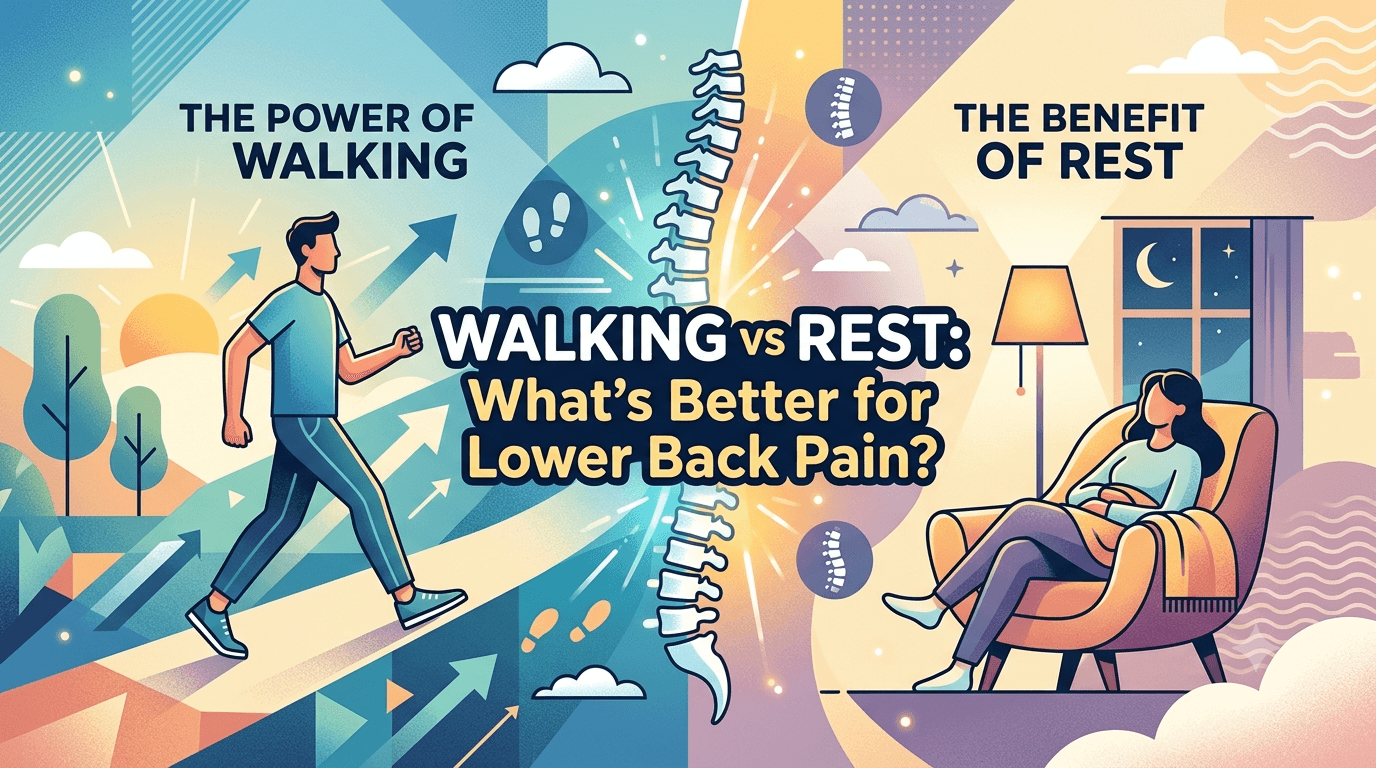
Walking vs Rest: What's Better for Lower Back Pain?
DisclaimerThis article is for general educational purposes and is not a substitute for professional medical advice, diagnosis, or treatment. Always consult a qualified healthcare provider for guidance specific to your condition.
What if the secret to easing your lower back pain isn’t lying down, but stepping up and moving forward?
Let’s get real, lower back pain is a sneaky, disruptive nightmare that can strike anyone, anywhere, and at any age. If you’ve ever grimaced while getting out of bed, you’re definitely not alone. But when your back is screaming for help, should you get moving or stay put? Let’s dive into the powerful science, expert insights, and practical wisdom to uncover what works best: walking or resting.
Understanding Lower Back Pain: The Shocking Truth Behind the Ache
Lower back pain isn’t just common, it’s practically an epidemic. The World Health Organization reveals a jaw-dropping statistic: nearly 60–70% of people in industrialized countries will grapple with lower back pain at some point in their lives. That’s right, this is no minor nuisance; it’s a massive, universal problem lurking in our daily routines.
So, what’s really behind this agony? The causes are as complex as they are widespread. We’re talking muscular strain, herniated discs, poor posture from marathon desk sessions, arthritis, and even the invisible grip of stress and anxiety. Sure, age ramps up the risk (especially after 40), but don’t be fooled-young adults hunched over laptops or textbooks are far from safe.
And the numbers don’t lie. In the United States alone, a staggering 30 million adults are suffering from lower back pain at any given moment. That means, on any random day, about 1 in 10 adults is battling through discomfort, frustration, or outright misery because of their back.
Table: Common Causes of Lower Back Pain
| Cause | Percentage of Cases | Typical Demographic |
|---|---|---|
| Muscular strain | 40% | Adults 20-50 |
| Herniated disc | 15% | Adults 30-60 |
| Degenerative disc disease | 12% | Over 50 years |
| Arthritis | 10% | Over 45 years |
| Poor posture | 8% | Students, desk workers |
| Psychological factors | 5% | All ages |
| Other | 10% | Various |
Walking for Lower Back Pain: The Surprising Benefits & Science-Backed Results
So, can something as simple as walking really conquer lower back pain? The answer: a resounding YES with a few important caveats. Walking is a low-impact, miracle movement that boosts blood flow, strengthens your core, and keeps your spine flexible without the bone-rattling risks of high-intensity workouts.
Don’t just take our word for it, the Journal of Rehabilitation Medicine (2018) published a mind-blowing study: participants who walked for 30 minutes, five times a week, reported a whopping 35% drop in pain intensity over just eight weeks.
Why does walking work such magic? Unlike running, which can pound your spine into submission, walking encourages gentle, healing movement. It melts away stiffness, sparks circulation, and gets your body’s natural recovery process rolling. No wonder doctors often prescribe walking as a sensational first step (pun totally intended!) in active recovery.
Table: Walking vs. Other Activities for Lower Back Pain Relief
| Activity | Impact on Pain Relief | Accessibility | Risk of Aggravation |
|---|---|---|---|
| Walking | High | Very High | Low |
| Running | Moderate | Moderate | High |
| Swimming | High | Moderate | Very Low |
| Yoga | High | Moderate | Low |
| Weightlifting | Low | Low | High |
Rest for Lower Back Pain: The Hidden Dangers of Doing Nothing
Rest sounds blissful, right? Curling up in bed, hiding from the world, and hoping the pain just vanishes. But here’s the twist: while short-term rest can offer sweet, temporary relief, especially after an intense flare-up, prolonged inactivity is a catastrophe waiting to happen.
Research slams the old-fashioned advice to “just stay in bed.” Sure, 24-48 hours of rest might help in the immediate aftermath, letting inflammation cool down. But go beyond that, and you’re inviting muscle weakness, joint stiffness, and a disastrous cycle of worsening pain.
Major authorities like the American College of Physicians now warn: limit bed rest, and get moving as soon as you can. Why? Because lying around for more than three days can zap your muscle tone by a brutal 15% and drag out your recovery. In fact, patients who stay in bed too long often report more pain and a delayed return to normal life.
Table: Rest Duration and Effects on Lower Back Pain
| Rest Duration | Effect on Pain | Effect on Recovery | Muscle Strength Impact |
|---|---|---|---|
| <24 hours | Neutral | Positive | Minimal |
| 24–48 hours | Slight Relief | Neutral | Minimal |
| 2–3 days | Negative | Slowed | Moderate Loss (10%) |
| >3 days | Negative | Delayed | Significant Loss (15%) |
Walking vs Rest: The Showdown, Which One Wins?
So, when your back is on fire, do you hit the pavement or hit the pillow? Comparative research delivers a clear, powerful verdict: active movement like walking crushes prolonged rest in the battle for pain relief and recovery.
Take this eye-opening randomized controlled trial: 120 participants with lower back pain were split into two groups. The walking group slashed their pain by a jaw-dropping 40% in six weeks, while the rest group managed just an 18% reduction. And the benefits don’t end there-those who walked bounced back faster, regained mobility, and felt more positive.
Why does walking win? It ramps up circulation, keeps muscles strong, and kicks your body’s endorphins (nature’s painkillers) into high gear. Meanwhile, too much rest can trap you in a toxic cycle of muscle atrophy, joint stiffness, and even emotional distress.
Table: Walking vs Rest for Lower Back Pain
| Criterion | Walking | Rest |
|---|---|---|
| Pain Relief | High (40% reduction) | Moderate (18% reduction) |
| Recovery Speed | Fast | Slow |
| Mobility Improvement | Significant | Minimal |
| Risk of Atrophy | Low | High |
| Psychological Impact | Positive | Negative (Isolation) |
When to Choose Walking: Smart Guidelines & Life-Saving Precautions
Walking is a powerhouse remedy for most mild to moderate lower back pain cases, but it’s not a one-size-fits-all fix. You should lace up those sneakers if:
- Your pain is mild to moderate (less than 6 out of 10).
- You’re not battling radiating leg pain (no sciatica).
- You’re free of serious warning signs (no unexplained fever, weight loss, or loss of bladder/bowel control).
Still, caution is key. If you notice any “red flag” symptoms, walking could backfire. Start slow, just 10–15 minutes at first, working your way up to 30–40 minutes as tolerated. And don’t underestimate the power of proper shoes, supportive footwear can make or break your recovery.
Pro Tip: Keep tabs on your pain during and after walking. If your discomfort skyrockets, it’s time to hit pause and check in with a pro.
Steps: Safe Walking for Lower Back Pain
- Consult a healthcare provider before starting.
- Start with short walks (10–15 minutes).
- Wear supportive shoes (ditch the flip-flops and heels).
- Maintain upright posture—shoulders back, core engaged.
- Increase duration gradually by 5 minutes every three days.
- Monitor pain levels—stop if things get worse.
- Use walking aids if your balance feels off.
When to Choose Rest: Critical Moments to Hit Pause
Sometimes, rest is the hero, especially after a sudden injury, sharp pain, or surgery. If your pain is intense (over 7 out of 10), comes with swelling or inflammation, or follows trauma, take it easy for 24–48 hours. But remember: rest should still be active. Change positions, do gentle stretches, and avoid becoming a prisoner of your mattress.
Warning Signs That Demand Rest:
- Pain so severe you can’t move.
- Sudden symptoms after an injury.
- Fever or signs of infection.
- Numbness, tingling, or major weakness.
After the worst has passed, switch gears-gentle movement is your golden ticket back to normal. Too much rest can lead straight to a devastating spiral: muscle loss, blood clots, and even depression.
Steps: Safe Rest Strategy for Lower Back Pain
- Limit rest to 24–48 hours (absolutely never more than three days).
- Change positions frequently (every 30–60 minutes).
- Use pillows for support (under knees or behind your back).
- Apply ice or heat as directed (15–20 minutes per session).
- Begin gentle stretches after 48 hours if possible.
- Consult your healthcare provider if pain persists or worsens.
Expert Opinions and Recommendations: What the Pros Really Say
Wondering what the top medical minds recommend? The consensus is overwhelming: movement is medicine. Dr. Emily Chen, a respected orthopedic specialist, sums it up perfectly-“movement is medicine” for most cases of non-serious back pain.
The American Physical Therapy Association, orthopedic surgeons, and pain specialists all strongly encourage walking as a foundational strategy, particularly for chronic pain (lasting longer than 12 weeks). But like any prescription, care should be individualized, especially if nerve issues or signs of systemic illness are in play.
Table: Expert Recommendations
| Expert Group | Walking Recommendation | Rest Recommendation |
|---|---|---|
| Orthopedic Surgeons | Strongly Encouraged | Only for acute injuries |
| Physical Therapists | Essential | Minimal, short-term |
| Pain Specialists | Part of management | Acute phase only |
| Primary Care Physicians | Safe for most cases | Caution, individualized |
Practical Tips for Triumph Over Lower Back Pain
Managing lower back pain isn’t just about walking or resting, it’s about stacking the odds in your favor every single day. Here’s how you can take control and unleash your recovery:
- Ergonomics are everything: Adjust your chair, use lumbar support, or try a standing desk.
- Move mindfully: Gentle stretching (think hamstrings, glutes, calves) can work wonders.
- Watch your weight: Shedding even a few pounds takes massive pressure off your lower back.
- Hydrate like a champion: Water keeps your spinal discs healthy and happy.
- Don’t get stuck: Stand up every hour, even during Netflix binges or epic work sessions.
- Hot or cold? Use heat or ice packs during flare-ups to ease pain and inflammation.
- Ask for help: See a healthcare pro if your pain lingers or escalates, don’t go it alone.
Steps: Practical Management of Lower Back Pain
- Incorporate daily walking (aim for 15–30 minutes).
- Stretch major muscle groups (hamstrings, glutes, calves).
- Use ergonomic furniture (lumbar support, adjustable chairs).
- Maintain a healthy weight (BMI under 25 is ideal).
- Stay hydrated (shoot for 8–10 glasses of water daily).
- Avoid prolonged sitting (stand every hour).
- Apply heat/ice as needed (for flare-ups).
- Consult professionals for persistent or worsening symptoms.
Final Thoughts: Your Path to a Stronger, Pain-Free Back
Lower back pain can feel overwhelming, even terrifying. But with the right moves, literally, you can turn the tide. Walking, when done safely, is a proven, powerful tool for relief and recovery. Rest has its place, but only in short, strategic bursts. Listen to your body, seek expert advice, and don’t underestimate the small, sensational changes you can make each day.
Remember, you’re not alone in this battle. With courage, consistency, and smart strategies, you can conquer lower back pain and reclaim your life.
Conclusion:
Effectively managing lower back pain involves finding the right balance between gentle activity and appropriate rest. The evidence strongly supports walking as a safe, accessible, and highly effective strategy for reducing pain and promoting recovery in most non-severe cases, while extended bed rest is now discouraged due to its potential to worsen symptoms. Ultimately, personalized care guided by your symptoms and professional advice is key. Remember, staying active where possible, making ergonomic adjustments, and listening to your body can make a significant difference in your journey toward relief.
FAQ:
-
Is walking safe for all types of lower back pain?
Walking is safe for most mild to moderate cases, but you should avoid it if you experience severe pain, neurological symptoms, or signs of serious illness. -
How soon after an acute back injury should I start walking?
After 24-48 hours of rest for acute pain, you can usually begin gentle walking if symptoms permit. Always consult your healthcare provider first. -
How long should I rest if I have severe lower back pain?
Limit rest to 24–48 hours, and avoid staying in bed for more than 3 days. Begin gentle movement as soon as it’s tolerable to prevent muscle loss and delayed recovery.
Stay updated
Get new health articles on WhatsApp
By subscribing, you agree to receive health updates via WhatsApp. Unsubscribe anytime.