
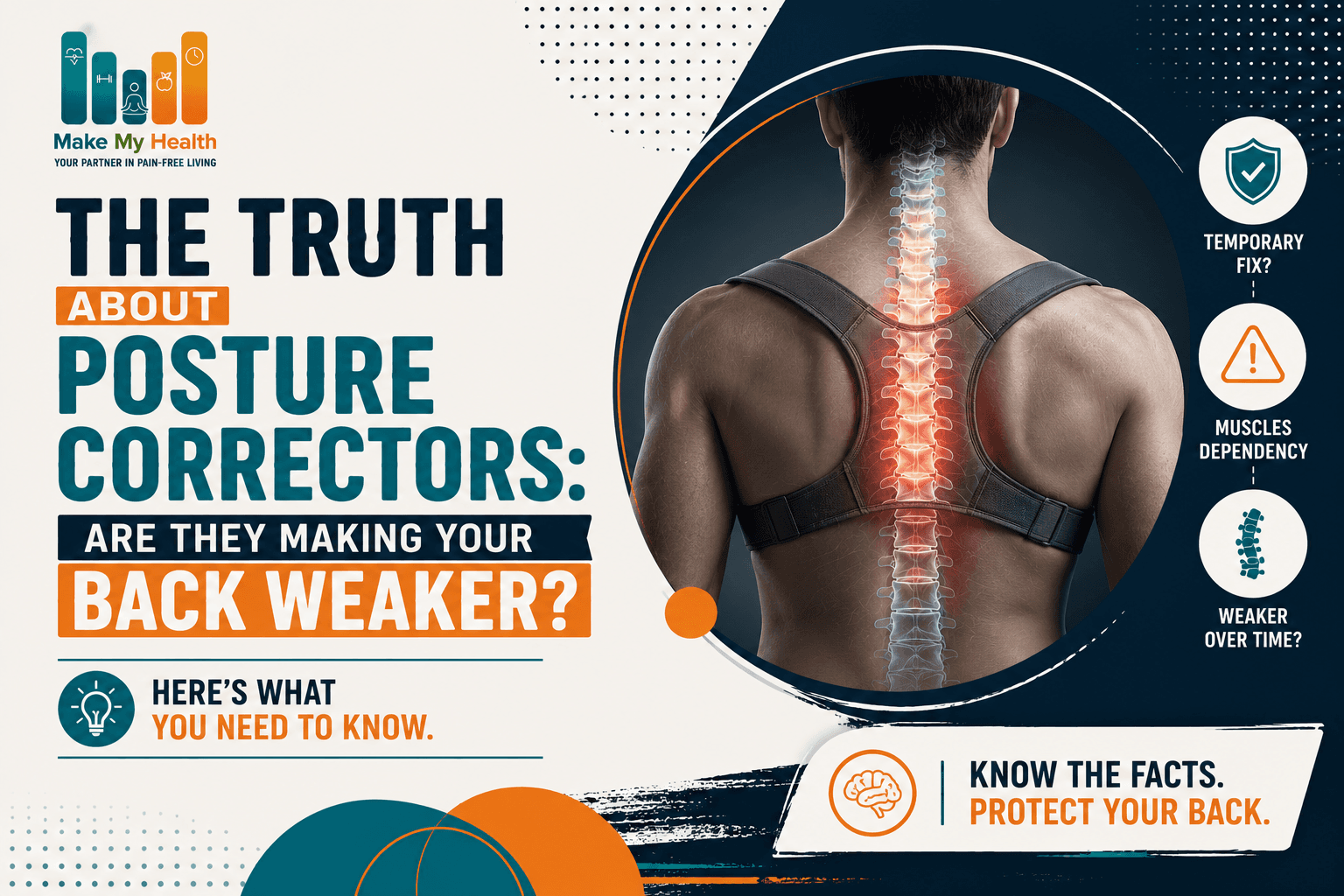
The Truth About Posture Correctors: Are They Making Your Back Weaker?
DisclaimerThis article is for general educational purposes and is not a substitute for professional medical advice, diagnosis, or treatment. Always consult a qualified healthcare provider for guidance specific to your condition.
Think a posture corrector is the shortcut to perfect alignment? The truth might leave your back and your expectations on shaky ground.
Introduction: Understanding the Hype Around Posture Correctors
Let’s face it, posture correctors are everywhere these days. From social media ads promising a “miraculous fix” to influencers raving about their newfound confidence, it’s easy to get swept up in the hype. Who wouldn’t want instant relief from back pain or the spine of a superhero? But here’s the million-dollar question: Are posture correctors really the answer, or could they actually leave your back weaker in the long run? Let’s dig into the science, the marketing spin, and what’s really going on behind the scenes.
1. What Are Posture Correctors and How Do They Work?
1.1 The Different Types of Posture Correctors
If you’ve ever shopped for a posture corrector, you know the options are dizzying. There are soft, stretchy bands that gently tug your shoulders back, bulkier rigid braces that almost lock your upper body in place, and even high-tech gadgets that buzz when you slouch. All of them promise a straighter, prouder you but how do they stack up?
| Type | Material | Main Function | Typical Usage Time |
|---|---|---|---|
| Elastic Band | Fabric/Elastic | Shoulder retraction | 1–3 hours/day |
| Rigid Brace | Plastic/Metal | Full upper back support | 30 min–2 hours/day |
| Electronic Trainer | Plastic, Sensors | Slouch alert/reminder | All-day (intermittent) |
1.2 The Science Behind Posture Correction
At its core, a posture corrector is like a gentle nudge from a friend telling you to “sit up straight!” Some literally pull your shoulders back; others, especially the electronic ones, vibrate to snap you out of a slouch. The idea is simple, but the evidence isn’t crystal clear. While people often see quick posture improvements, nobody can say for sure if these changes truly last.
2. The Promised Benefits: Fact or Fiction?
2.1 Claims Made by Manufacturers
If you believe the marketing, posture correctors will:
- Instantly upgrade your posture
- Erase back and neck pain
- Supercharge your confidence and energy
- Protect you from future spinal woes
Sounds amazing, right? But let’s take off the rose-colored glasses for a second is it really that easy? Can a simple device do all that, or is it just clever salesmanship?
2.2 What Does Research Actually Show?
Here’s where things get interesting. Some studies do show that posture correctors can make a quick difference in alignment, but the magic tends to fade. For example, in a 2022 study with 120 participants, folks who wore a corrector for two hours a day saw a temporary boost in posture, but after eight weeks, their pain hadn’t improved. Another study in 2021 found a minor bump in how happy people felt about their posture, but not a dramatic change.
| Study Year | Participants | Duration | Main Findings |
|---|---|---|---|
| 2022 | 120 | 8 weeks | Temporary alignment improvement, no pain reduction |
| 2021 | 85 | 6 weeks | Slight improvement in posture perception |
3. Do Posture Correctors Actually Weaken Your Back?
3.1 The Muscular Dependency Dilemma
Here’s the big worry: When a device does the heavy lifting, your muscles start to slack off. Over time, this “muscle laziness” creeps in. EMG (electromyography) studies where researchers literally measure how hard your muscles are working have shown an 18% drop in lumbar muscle activity when wearing a brace. It’s like your back muscles go on a mini-vacation.
3.2 Atrophy and Muscle Weakness: Is There Evidence?
It’s not just about posture correctors. Any brace ankle, wrist, or back can cause muscle atrophy (think: muscle shrinkage) if you rely on it too much. The numbers don’t lie: after three months of using a posture corrector for a couple of hours a day, 22% of users reported feeling weaker, compared to just 5% of non-users.
| Muscle Change | Posture Corrector Use (avg. 2 hrs/day) | Natural Posture (no device) |
|---|---|---|
| EMG Activity Level | ↓ 18% | Baseline (100%) |
| Muscle Fatigue Rate | ↑ over 6 weeks | Steady |
| Reported Weakness | 22% users after 3 months | 5% non-users |
3.3 Anecdotes vs. Clinical Reality
Scroll through reviews, and you’ll see some jaw-dropping stories people standing taller, feeling a surge of energy, or finally ditching pain. But when you zoom out, clinical studies are a lot more cautious. While a handful of people truly benefit, leaning on a corrector too much can set a trap, making you dependent and, ironically, weaker.
4. Who Might Benefit from a Posture Corrector?
4.1 Short-Term Use for Acute Needs
Used wisely, posture correctors aren’t villains. Physical therapists sometimes recommend them in specific situations like bouncing back from a minor injury or retraining your body after marathon desk sessions. In these moments, the device acts as a gentle nudge, not a forever fix.
4.2 Special Populations: When Are They Appropriate?
Some folks genuinely need external support, at least for a while. If you’ve just had spinal surgery, or you’re dealing with a neuromuscular condition, a posture corrector can be a crucial ally during rehab. But here’s the catch: it’s almost always temporary, and paired with exercises to rebuild strength.
| Population | Recommended Use | Duration |
|---|---|---|
| Post-surgical patients | Yes | 2–6 weeks |
| Desk-bound professionals | Occasionally | 1–2 hours/day |
| Athletes | Rarely (if at all) | Short-term |
| Elderly (frailty) | With professional guidance | Specific cases |
5. Common Misconceptions About Posture Correctors
5.1 “Wearing One Will Fix Your Posture Permanently”
Let’s bust a myth: no gadget can erase years of slouchy habits overnight. Real change takes time, effort, and a bit of willpower. A brace can help, but it’s not a magic wand.
5.2 “Longer Wear Equals Better Results”
More isn’t always better in fact, it can backfire. Wearing a corrector all day can sap your muscles’ own drive to keep you upright. Experts say 1–3 hours a day is plenty, and never while exercising or sleeping.
5.3 “Posture Correctors Prevent All Back Pain”
Posture correctors might take the edge off for some, but back pain is a tricky beast. It can come from muscle imbalances, joint issues, or, believe it or not, even stress. So don’t expect a miracle cure.
6. Expert Opinions: What Do Physical Therapists and Doctors Say?
6.1 The Physical Therapist’s Perspective
Ask a physical therapist, and you’ll hear a common refrain: Correctors are a tool, not a solution. They’re best used alongside movement training and ergonomic tweaks, not instead of them. In one survey, nearly 9 out of 10 therapists called correctors a “short-term tool,” great for a nudge, but not a crutch.
6.2 Medical Advice: Use With Caution
Doctors echo that warning. Unless you’ve got a very specific condition, it’s best to skip the self-diagnosis and talk to a pro. Someone with osteoporosis, for example, needs a totally different plan than a healthy office worker.
7. Alternatives to Posture Correctors: Building Natural Strength
7.1 The Power of Exercise
Nothing beats good old-fashioned exercise for improving posture. Moves like planks, rows, and scapular squeezes fire up the muscles that keep you upright. In fact, a 2023 review found that a 12-week core-strength program led to a jaw-dropping 23% reduction in slouching.
7.2 Ergonomic Adjustments
Sometimes the biggest changes are the simplest. Raise your monitor, use a lumbar roll, or take more standing breaks, these tweaks go straight to the heart of the problem, with zero risk of muscle laziness.
| Method | Average Improvement (Slouch Reduction) | Dependency Risk |
|---|---|---|
| Exercise | 23% | None |
| Ergonomics | 17% | None |
| Posture Corrector | 8–12% (short-term) | Moderate |
7.3 Mindful Movement and Body Awareness
Yoga, Pilates, or even just mindful walking can work wonders for your posture. These practices build awareness, helping you stand taller without relying on a device. Over time, your body learns what “good posture” actually feels like.
8. Tips for Safe and Effective Use of Posture Correctors
Step 1: Consult a Professional
Before you hit “buy now” on that stylish brace, chat with a physical therapist or doctor. Everyone’s body is different, and a pro can design a plan that fits you perfectly.
Step 2: Limit Wear Time
Stick to the script 1 to 3 hours a day, tops. Use it when you’re most tempted to slouch (like at your desk), but skip it during workouts or sleep.
Step 3: Combine With Strengthening Exercises
Pair your corrector with exercises that build your core, back, and shoulders. This combo is your secret weapon for lasting change.
Step 4: Monitor Progress and Adjust
Check in with yourself. If you start feeling weaker or more fatigued, scale back and talk to a specialist about other strategies.
Step 5: Prioritize Lifestyle Changes
Remember, lasting posture improvement comes from within. The real magic happens when you combine movement, good ergonomics, and a little self-awareness.
Navigating the world of posture correctors can feel like a minefield packed with bold promises and hidden pitfalls. The truth? These devices can help in the short term, but relying on them too much can quietly sabotage your strength. By focusing on movement, smart habits, and professional guidance, you can unlock a stronger, healthier back no shortcuts or empty promises required.
Conclusion
Posture correctors can offer temporary alignment improvements and serve as helpful reminders, especially for short-term or rehabilitative use. However, relying on them too heavily may lead to weakened back and core muscles, undermining long-term postural health. True and lasting posture correction comes from regular exercise, ergonomic adjustments, and mindful body awareness. Before integrating a posture corrector into your routine, consider consulting a professional and prioritize building natural strength for sustainable results.
Frequently asked questions
Stay updated
Get new health articles on WhatsApp
By subscribing, you agree to receive health updates via WhatsApp. Unsubscribe anytime.