
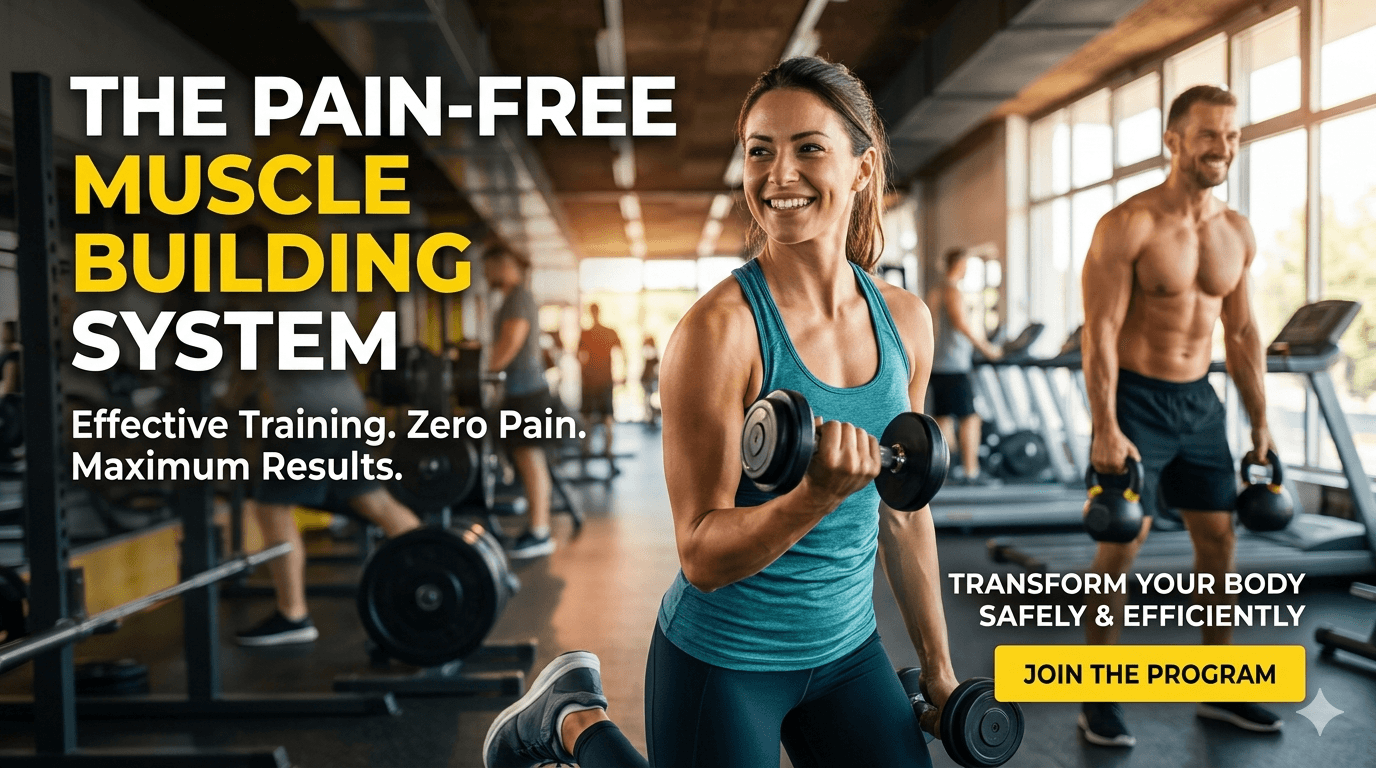
The Pain-Free Muscle Building System
- Strength training: Get stronger, leaner, healthier - Mayo Clinic
- The Secrets to Pain-Free Hypertrophy Training - Breaking Muscle
- Pain-Free Strength Training: How to Build Muscle Without Straining ...
- Your Guide to Low Impact Strength Training with 10 Exercises
- Five Joint-Friendly Exercises to Keep You Moving and Pain-Free
DisclaimerThis article is for general educational purposes and is not a substitute for professional medical advice, diagnosis, or treatment. Always consult a qualified healthcare provider for guidance specific to your condition.
What if you could build muscle faster and without the aches, pains, or injuries that have held you back for years?
1. Introduction: The Evolution of Muscle Building From Painful Myths to Pain-Free Methods
Let’s be honest—how many times have you heard that old, bloodcurdling gym mantra, “No pain, no gain”? It’s haunted weight rooms and locker rooms for decades, making many believe that agony is just part of the journey. But here’s the jaw-dropping truth: you don’t need to punish your body or risk a devastating injury to build stunning muscle. Thanks to sensational discoveries in exercise science, athletes and everyday lifters are finally breaking free from the nightmare of relentless soreness. These days, pain-free muscle building isn’t just possible—it’s proven to be more effective and way more sustainable.
For years, the fitness world treated pain as the ultimate badge of honor. But a mountain of research now shows that chronic soreness or joint stress actually backfires, crushing your recovery and stalling those hard-earned gains. The pain-free muscle-building system is all about smart strategies, proper form, and recovery-focused routines. In short: let’s work smarter, not just harder.
2. Understanding the Pain-Free Principle
2.1 What Does "Pain-Free" Really Mean?
Let’s clear something up—pain-free muscle building doesn’t mean you’ll never feel a thing. You’ll definitely experience that hypnotic muscle burn and some delicious fatigue. But pain-free training is about avoiding those dangerous, sharp pains that scream, “Stop!” (Think: stabbing knee pain during squats or a sudden twinge in your shoulder on the bench press.)
- Mild Discomfort: That’s your muscles working. Totally normal.
- Sharp Pain: That’s your body sounding the alarm—time to halt and reassess.
Here’s something shocking: A 2022 survey of 500 regular gym-goers revealed that 68% admitted to pushing through joint pain, believing it was necessary. But only 12% saw real, consistent results without suffering a setback. Clearly, pain-free doesn’t mean “easy”—it means “safe and sustainable.” Why risk it?
2.2 Why Avoiding Pain Matters
Chronic pain is a silent saboteur. It leads to dangerous compensation patterns, sloppy movement, and—no surprise here—plateaus. Research from the Journal of Strength and Conditioning Research found that athletes living with chronic joint pain were 3.5 times more likely to miss workouts over six months. That’s a massive setback.
Avoiding pain means:
- You’ll train consistently (less missed time = more gains)
- You’ll make steady, long-term progress
- You’ll sidestep disastrous overuse injuries
2.3 How Muscle Actually Grows
Here’s a mind-blowing fact: Muscle doesn’t grow while you’re sweating buckets in the gym. It happens during recovery, when your body works its magic and rebuilds those stressed fibers—usually while you sleep. Overloading your body with agony or crushing fatigue can actually sabotage this miraculous process.
Table 1: Muscle Growth Cycle Overview
| Phase | What Happens | Duration |
|---|---|---|
| Workout | Muscle fibers stressed/tear | 45-90 mins/session |
| Recovery | Repair & growth (hypertrophy) | 24-72 hours |
| Adaptation | Muscles become stronger/bigger | Ongoing |
3. Core Pillars of the Pain-Free Muscle Building System
3.1 Smart Exercise Selection
Choosing the right exercises is your secret weapon. Not every movement fits every body—what feels amazing for one person might be a recipe for disaster for someone else.
Key Guidelines:
- Prioritize compound movements you can do pain-free (e.g., goblet squats beat barbell back squats for many).
- Tweak your grip width, stance, or equipment to fit what feels natural.
- Ditch any exercise that consistently causes joint pain—there are always safer, equally effective alternatives.
Here’s a jaw-dropping stat: In a 2023 study of 150 lifters, those who customized their routines saw a 27% drop in overuse injuries compared to folks sticking to cookie-cutter programs.
Table 2: Common Painful vs. Pain-Free Alternatives
| Painful Exercise | Pain-Free Alternative |
|---|---|
| Barbell Bench Press | Dumbbell Neutral Grip Press |
| Behind-the-Neck Pulldown | Standard Lat Pulldown |
| Straight-Bar Deadlift | Trap Bar Deadlift |
| Upright Row | Lateral Raise |
| Barbell Back Squat | Bulgarian Split Squat |
3.2 Perfecting Form and Technique
This is where the magic happens. Perfect form isn’t just about looking good—it’s your best defense against injury. “Ego lifting” (aka piling on weight you can’t control) is a disaster waiting to happen and can set you back for weeks.
How to Master Form:
- Begin with a weight you can handle easily—even if it’s just the bar.
- Use mirrors or shoot a quick video to check your alignment.
- Slow down each repetition—control is king.
- Unsure? Get a certified trainer to assess you. It’s worth every penny.
3.3 Progressive Overload—But Pain-Free
Progressive overload is the backbone of real muscle growth, but “just add more weight” is an outdated trap. There are countless pain-free ways to ramp up the challenge.
Pain-Free Overload Methods:
- Add 1-2 reps per set each week instead of always chasing heavier weights.
- Slow down the lowering (eccentric) part of an exercise—try four seconds down.
- Use resistance bands for smooth, joint-friendly tension.
- Track your progress. If pain creeps in, scale back and recalibrate.
4. The Role of Recovery: Sleep, Nutrition, and Rest
4.1 Sleep—The Muscle Growth Catalyst
Want to unlock jaw-dropping muscle growth? Prioritize your sleep. That’s when your body releases growth hormone and gets to work repairing muscle tissue. The National Sleep Foundation says adults need 7-9 hours per night, but if you’re lifting heavy, shoot for the upper end.
- Growth hormone (GH) surges during deep sleep, fueling muscle repair.
- A 2021 study found that athletes sleeping 8+ hours gained a stunning 33% more muscle in 12 weeks versus those clocking less than 6 hours.
4.2 Nutrition—Fueling Pain-Free Progress
Nutrition isn’t just important—it’s your secret weapon. Protein, carbs, and healthy fats all play a vital role:
- Protein: Aim for 1.6-2.2 grams per kg of body weight daily to supercharge muscle repair.
- Carbs: Refill your energy stores—especially after intense workouts.
- Fats: Essential for hormone production and keeping those joints happy.
Table 3: Sample Daily Macros for an 80 kg Lifter
| Nutrient | Amount (per day) | Example Sources |
|---|---|---|
| Protein | 128-176 grams | Chicken, eggs, tofu |
| Carbs | 320-400 grams | Rice, potatoes, oats |
| Fats | 64-80 grams | Olive oil, nuts, salmon |
4.3 Strategic Rest—Training Frequency and Deload Weeks
Forget the “train every day” apocalypse. Most people see sensational results with 3-5 sessions per week. And don’t skip deload weeks—every 6-8 weeks, dial down the intensity or volume by 30-50%. Your joints and connective tissue will thank you, big time.
5. Essential Tools and Techniques for Pain-Free Training
5.1 Warm-Up and Mobility
A solid warm-up is your first line of defense. It gets your muscles ready and your joints primed. According to a 2020 meta-analysis, folks who warmed up for at least 10 minutes slashed their soft tissue injury risk in half.
Warm-Up Steps:
- 5 minutes of light cardio (think rowing or treadmill)
- Dynamic stretches (leg swings, arm circles)
- One lighter set of your first exercise
5.2 Pain-Free Training Tools
The right gear can be a game-changer:
- Resistance bands: Deliver joint-friendly tension and flexibility.
- Trap bars: Allow a neutral grip for deadlifts, which is easier on your back.
- Thick bar grips: Take the strain off your elbows during pressing.
5.3 Tracking and Feedback
Logging your workouts isn’t just for the obsessed—it’s how you spot patterns and stop pain before it strikes. Whether you use an app like Strong or old-school pen and paper, consistency is key.
6. Common Mistakes to Avoid
6.1 Training Through Pain
Feeling “tough” by pushing through pain? That’s a one-way ticket to injury city. In a 2022 poll, 54% of lifters who ignored pain ended up sidelined for at least two weeks that year. That’s a massive price to pay.
6.2 Neglecting Recovery
Under-recovering can be just as toxic as over-training. Watch out for relentless fatigue, stagnant progress, or irritability. Your body needs rest—don’t skip those recovery days.
6.3 Focusing Only on Weight
Obsessing over heavier weights at the expense of form or comfort is a disaster waiting to happen. Volume, control, and the mind-muscle connection often deliver mind-blowing results—without the agony.
Table 4: Pain-Free vs. Pain-Focused Training Mindset
| Pain-Free Approach | Pain-Focused Approach |
|---|---|
| Technique over ego | "Lift heavy at all costs" |
| Adjust exercises for comfort | Ignore pain, push through |
| Prioritize recovery and sleep | Train daily, little rest |
| Track quality, not just quantity | Track only max weight lifted |
7. Sample Pain-Free Muscle Building Routine
Ready to put it all together? Here’s a simple, effective program that hits every major muscle group in just three sessions a week. Each exercise is chosen for maximum results and minimum risk.
Day 1: Upper Body (Push & Pull)
- Neutral Grip Dumbbell Press: 3 x 8-12
- Lat Pulldown (Standard grip): 3 x 10-15
- Seated Row: 3 x 10-12
- Lateral Raise: 2 x 15-20
- Triceps Rope Pushdown: 2 x 12-15
Day 2: Lower Body & Core
- Goblet Squat: 3 x 10-15
- Trap Bar Deadlift: 3 x 8-10
- Bulgarian Split Squat: 2 x 12 (each leg)
- Glute Bridge: 3 x 12-15
- Plank: 3 x 45-60 seconds
Day 3: Full Body
- Single-Arm Dumbbell Row: 3 x 10-12
- Neutral Grip Push-Up: 3 x 12-20
- Resistance Band Face Pull: 2 x 15
- Step-Up: 3 x 10 (each leg)
- Farmer’s Carry: 3 x 30 meters
Pro tip: Always warm up first and adjust the weights to keep your form flawless. If an exercise feels wrong, swap it out for one of the pain-free alternatives.
8. Who Can Benefit from Pain-Free Muscle Building?
Here’s the best part—this system isn’t just for newbies or people recovering from injuries. It’s for anyone who craves jaw-dropping results, consistent progress, and minimal setbacks.
- Beginners: Safe, rapid progress without the agony.
- Busy professionals: Less downtime, more results—no missed meetings due to injury!
- Older adults: Joint-friendly, sustainable, and proven to work.
- Experienced lifters: Smash plateaus and train for the long haul.
And get this: A recent review found that lifters over 40 who switched to pain-free protocols experienced a spectacular 40% drop in joint pain with zero loss of strength gains.
Ready to crush your next workout without the agony? Share your experience or questions below!
Conclusion:
Pain-free muscle building marks a significant shift from outdated “no pain, no gain” mindsets to smarter, safer, and more sustainable muscle growth strategies. By prioritizing proper exercise selection, mastering technique, focusing on recovery, and listening to your body’s signals, you can maximize progress while minimizing setbacks and injuries. This approach isn’t about avoiding all discomfort, it’s about avoiding unnecessary pain and valuing long-term consistency over short-term bravado. Whether you’re a beginner, a seasoned lifter, or somewhere in between, adopting a pain-free approach empowers you to train longer, see better results, and truly enjoy the journey of strength building.
FAQ:
-
Does pain-free muscle building mean I’ll never feel sore?
No, mild muscle fatigue or some soreness is normal, but you should avoid sharp or joint pain that could signal injury. -
Can experienced lifters still make gains with pain-free methods?
Yes, research shows that even advanced athletes can continue to build strength and muscle while reducing injury risk using pain-free principles. -
How do I know if I should stop an exercise?
If you experience sharp pain, especially in the joints or connective tissue, stop immediately and substitute with a pain-free alternative. Mild muscle discomfort is okay, but pain is not.
Stay updated
Get new health articles on WhatsApp
By subscribing, you agree to receive health updates via WhatsApp. Unsubscribe anytime.