
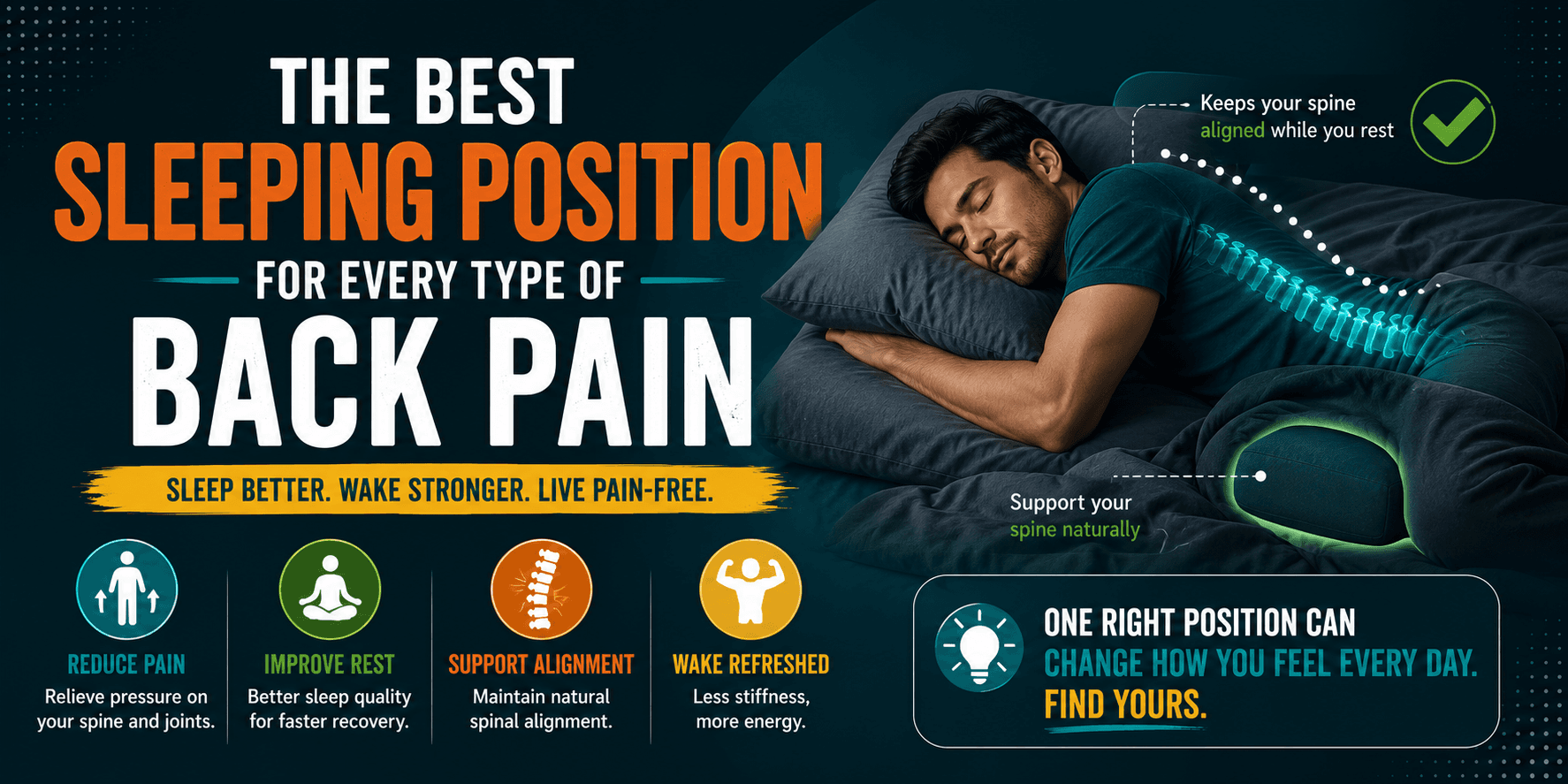
The Best Sleeping Position for Every Type of Back Pain
DisclaimerThis article is for general educational purposes and is not a substitute for professional medical advice, diagnosis, or treatment. Always consult a qualified healthcare provider for guidance specific to your condition.
Did you know the way you sleep tonight could be the difference between waking up pain-free or barely moving tomorrow?
The Best Sleeping Position for Every Type of Back Pain
Introduction
Back pain, whether it sneaks up on you out of nowhere or torments you for months, can feel absolutely relentless. In fact, nearly 80% of adults will experience some form of back pain at least once in their lives, according to jaw-dropping recent studies. But here’s the real shocker: the way you sleep can either conquer your pain or push you deeper into a vicious cycle of agony. Are you part of the 22% who wake up every morning feeling stiff, sore, and frustrated? If you nodded yes, discovering your perfect sleeping position could be your ticket to relief. Let’s dive into the science-backed secrets and practical wisdom behind the best sleeping positions for every type of back pain.
Step 1: Understanding Back Pain Types
Let’s get real, back pain isn’t one-size-fits-all. It comes in a range of intimidating varieties, each with its own sneaky triggers and symptoms. Before we tackle sleeping positions, let’s quickly break down the big players.
Lower Back Pain
Lower back pain (a.k.a. lumbar pain) is the undisputed champion of back woes. From muscle strains to herniated discs or sciatica, this pain can ambush anyone. The American Chiropractic Association reports that lower back pain alone is responsible for a whopping 264 million lost workdays every year in the U.S. Now that’s a crisis!
Upper Back Pain
Upper back pain zeroes in on your thoracic spine. Bad posture, overused muscles, or a sudden trauma often trigger it. While it’s not as notorious as lower back pain, it still plagues around 20% of adults.
Sciatica
Sciatica is the stuff of nightmares for many. This pain radiates along your sciatic nerve, shooting from your lower back through your hips and down each leg. Usually, a herniated disc or spinal stenosis is the culprit. Up to 40% of people will face this at some point—talk about a daunting statistic.
Scoliosis
Scoliosis is a twisted villain—an abnormal curve in your spine. Mild cases may be sneaky, but severe ones can unleash relentless pain and mobility nightmares. Shockingly, around 3% of adolescents are affected.
Spinal Stenosis
Spinal stenosis is when spaces in your spine narrow, putting your nerves in jeopardy. It’s especially common if you’re over 50, with about 500,000 Americans battling its symptoms every year.
Step 2: The Science Behind Sleeping Positions
Ever wonder why some mornings you wake up feeling like you’ve been in a brawl? Gravity, body alignment, and pressure points all play a crucial role in your spinal health while you sleep. Get it wrong, and you risk a bloodcurdling spike in pain and tension. Let’s break down how your sleep position either saves or sabotages your back.
| Sleeping Position | Spinal Alignment | Pressure Points | Risk for Back Pain |
|---|---|---|---|
| Back (Supine) | Neutral | Low | Minimal |
| Side (Lateral) | Varies | Moderate | Moderate |
| Stomach (Prone) | Hyperextended | High | High |
Notice how the back (supine) position usually offers the best alignment for most people, but there’s more to the story depending on your unique pain.
Step 3: Best Sleeping Positions for Lower Back Pain
If lower back pain’s got you in its grip, your sleeping position can be your secret weapon. Here’s how to fight back:
Supine (Back) with Knee Support
Lying on your back with a pillow under your knees isn’t just comfortable—it’s scientifically proven to help. A 4-inch pillow can reduce lumbar pressure by up to 30%! That’s a game-changer.
Steps:
- Lie flat on your back.
- Pick a medium-firm mattress (somewhere between 5.5 and 7.5 on the firmness scale).
- Slide a supportive, ergonomic pillow under your knees.
Side Sleeping with Pillow Between Knees
Side sleepers, rejoice! But don’t just flop over—keep your knees aligned with a pillow to avoid any nasty spinal twisting.
Steps:
- Lie on your side (left side is often best for circulation).
- Bring your knees up slightly toward your chest.
- Pop a 5-inch pillow between your knees.
Avoid Stomach Sleeping
Stomach sleeping is a toxic trap for your lower back. It can crank up the pressure and make things even worse. While 16% of adults still do it, experts say it’s definitely time for a change.
Step 4: Best Sleeping Positions for Upper Back Pain
Upper back pain can feel relentless, but a few clever tweaks can work wonders.
Back Sleeping with Head and Shoulder Support
Using a pillow that supports both your head and shoulders can conquer thoracic pressure and help you wake up pain-free.
Steps:
- Choose a pillow with a height between 4 and 6 inches.
- Sleep on your back.
- Make sure your shoulders are supported—but not propped too high.
Side Sleeping with Arm Positioning
Don’t let your arms sabotage your comfort! Proper positioning is critical to avoid a nasty shoulder ache.
Steps:
- Sleep on your side.
- Keep your arms parallel to your body—never tucked under your head.
- Use a pillow between your knees for extra spinal alignment.
Pillow Types for Upper Back Pain
| Pillow Type | Height (inches) | Material | Recommended For |
|---|---|---|---|
| Contour Memory Foam | 5 | Memory Foam | Back/Side Sleepers |
| Down Pillow | 4 | Down | Side Sleepers |
| Orthopedic Pillow | 6 | Foam | Back Sleepers |
Step 5: Best Sleeping Positions for Sciatica
Sciatica pain can be devastating, but the right position can help you reclaim your nights.
Side Sleeping with Elevated Knees
Elevating your knees takes the heat off your sciatic nerve, letting you rest easier.
Steps:
- Lie on your pain-free side.
- Place a pillow beneath your knees.
- Add another pillow between your knees for bonus comfort.
Back Sleeping with Pillow Under Calves
Sleeping on your back with a pillow under your calves keeps your spine neutral and your nerves happy.
Steps:
- Lie flat on your back.
- Place a 6-inch-thick pillow under your calves.
- Keep your knees slightly bent.
Comparison of Sciatica Sleeping Positions
| Position | Nerve Compression | Comfort Level | Recommended Usage |
|---|---|---|---|
| Side (Elevated Knees) | Low | High | Nightly |
| Back (Pillow Under Calves) | Low | Moderate | Occasional |
| Stomach | High | Low | Not Recommended |
Step 6: Best Sleeping Positions for Scoliosis
Scoliosis can make sleep feel like a nightly battle. But tailored support can turn things around.
Side Sleeping with Body Pillow
A full-length body pillow is your secret weapon, hugging your body and supporting your spine.
Steps:
- Sleep on your most comfortable side.
- Hug a body pillow (about 48 inches long).
- Place a pillow between your knees.
Back Sleeping with Lumbar Roll
A lumbar roll under your back is a small change with a massive impact.
Steps:
- Lie on your back.
- Place a lumbar roll (3 inches in diameter) at your lower back.
- Add a pillow under your knees.
Scoliosis Support Pillows
| Pillow Type | Dimensions | Support Focus | Suitable Position |
|---|---|---|---|
| Body Pillow | 48"x6" | Torso & Legs | Side |
| Lumbar Roll | 3"x12" | Lower Back | Back |
| Knee Pillow | 5"x10" | Knees | Side/Back |
Step 7: Best Sleeping Positions for Spinal Stenosis
Spinal stenosis can turn bedtime into a horror show—but the right position delivers serious relief.
Fetal Position
Curling up in a fetal position increases spinal flexion, giving those compressed nerves a break.
Steps:
- Lie on your side.
- Bring your knees towards your chest (but don’t tuck in too tightly).
- Place a pillow between your knees.
Reclined Back Sleeping
Sleeping slightly upright with your upper body elevated can work wonders for nerve pressure.
Steps:
- Use an adjustable bed or a 6-8 inch wedge pillow.
- Recline at a 30-45° angle.
- Place a pillow under your knees.
Spinal Stenosis Position Comparison
| Position | Spinal Flexion | Nerve Relief | Comfort Rating |
|---|---|---|---|
| Fetal | High | High | High |
| Reclined Back | Moderate | Moderate | Moderate |
| Flat Back | Low | Low | Low |
Step 8: Mattress and Pillow Recommendations
Your mattress and pillow aren’t just accessories—they’re essential weapons in your fight against back pain. In fact, research shows that a medium-firm mattress can slash back pain by a mind-blowing 45% compared to softer options.
Mattress Firmness Guide
| Firmness Level | Scale (1-10) | Suitable For |
|---|---|---|
| Soft | 1-4 | Side Sleepers (No Back Pain) |
| Medium-Firm | 5-7 | Most Back Pain Types |
| Firm | 8-10 | Heavyweight Sleepers |
Pillow Selection
Pick pillows that align your neck and support your spine—don’t let an oversized pillow turn your night into a nightmare. For neck support, try a cervical pillow (about 5 inches thick), and for spinal stenosis, a wedge pillow is magic.
Step 9: Tips for Adjusting to New Sleeping Positions
Let’s face it—changing your sleep habits isn’t a walk in the park. It takes willpower and a dash of patience (the average is 21 days to lock in a new routine), but the rewards are sensational.
Steps to Transition:
- Gradually change position: Start with 1-2 hours per night in the new position.
- Use support tools: Invest in body pillows, lumbar rolls, or wedges.
- Monitor pain: Track your pain each morning for two weeks—don’t ignore any warning signs.
- Seek professional advice: If pain lingers or worsens, reach out to a physical therapist or specialist.
Transition Timeline
| Week | Position Adjustment | Pain Monitoring | Tools Used |
|---|---|---|---|
| 1 | 1-2 hours | Daily | Basic Pillow |
| 2 | 3-4 hours | Daily | Body Pillow/Lumbar Roll |
| 3 | Full Night | Daily | Specialty Pillow |
Step 10: Common Mistakes to Avoid
Sometimes, the biggest disasters come from the smallest mistakes. Don’t let these blunders sabotage your progress:
Sleeping on a Soft Mattress
A mattress softer than 4 on the firmness scale can spell disaster for your back, leading to poor alignment and pain.
Using Oversized Pillows
Pillows taller than 7 inches can force your neck into unnatural, bloodcurdling angles.
Ignoring Body Signals
If a position ramps up your pain, don’t push through; listen to your body’s warning bells.
Step 11: Quick Reference Table Sleeping Positions by Back Pain Type
For a jaw-droppingly fast recap, here’s your one-stop guide:
| Back Pain Type | Best Position(s) | Pillow Recommendation | Mattress Type |
|---|---|---|---|
| Lower Back Pain | Back w/ Knee Pillow, Side w/ Knee Pillow | Ergonomic Knee Pillow | Medium-Firm |
| Upper Back Pain | Back w/ Shoulder Support, Side w/ Arm Position | Contour Memory Foam Pillow | Medium-Firm |
| Sciatica | Side w/ Elevated Knees, Back w/ Calf Pillow | Thick Pillow (6") | Medium-Firm |
| Scoliosis | Side w/ Body Pillow, Back w/ Lumbar Roll | Body Pillow, Lumbar Roll | Medium-Firm/Firm |
| Spinal Stenosis | Fetal, Reclined Back | Wedge Pillow, Knee Pillow | Adjustable/Medium-Firm |
Step 12: When to Seek Professional Help
If your back pain has you in agony for more than three weeks, gets worse at night, or comes with scary symptoms like numbness or weakness, get help-stat! Over 60% of chronic back pain sufferers see life-changing results from customized physical therapy and expert medical care.
Ready to transform your nights? Remember, the right sleeping position can truly be your ticket to triumph over back pain. Listen to your body, trust the science, and don’t be afraid to reach out for expert help when you need it.
Conclusion:
Sleeping position plays a crucial role in managing and alleviating back pain, whether it’s lower back discomfort, upper back tension, sciatica, scoliosis, or spinal stenosis. By understanding your specific type of back pain and adopting the recommended sleeping positions, along with appropriate mattresses and pillows, you can significantly reduce nighttime discomfort and support spinal health. Remember to transition gradually to new sleep habits and listen to your body’s cues-small adjustments can make a big difference in your quality of rest and overall well-being.
FAQ:
-
Which sleeping position is generally best for lower back pain?
Sleeping on your back with a pillow under your knees, or on your side with a pillow between your knees, is typically most beneficial for lower back pain. -
How long does it take to adjust to a new sleeping position?
It usually takes about 21 days to form a new sleep habit, so be patient and make gradual adjustments. -
What type of mattress is recommended for back pain sufferers?
A medium-firm mattress (5-7 on the firmness scale) is most often recommended, as it provides the right balance of support and comfort for most back pain types.
Stay updated
Get new health articles on WhatsApp
By subscribing, you agree to receive health updates via WhatsApp. Unsubscribe anytime.