
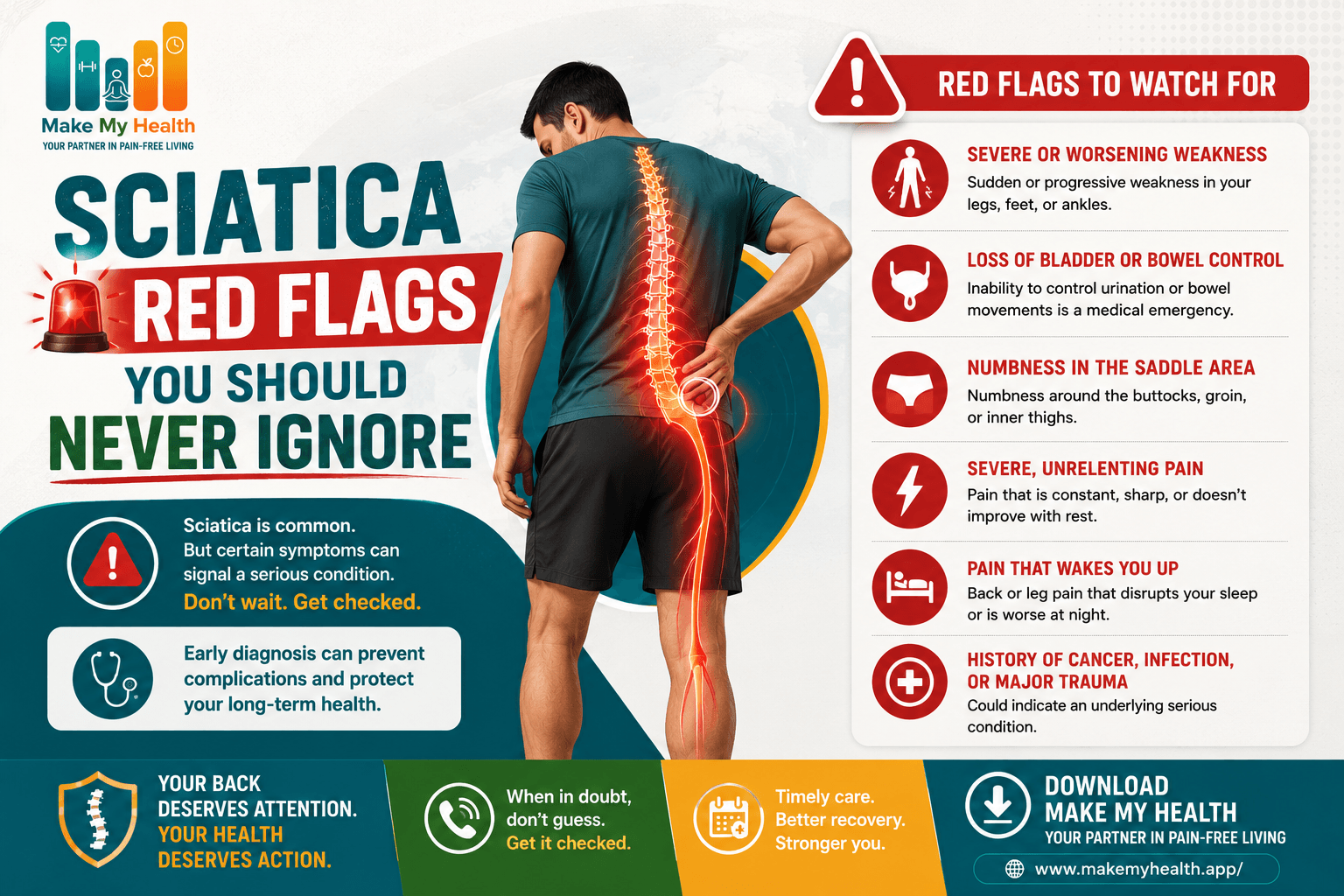
Sciatica Red Flags You Should Never Ignore
DisclaimerThis article is for general educational purposes and is not a substitute for professional medical advice, diagnosis, or treatment. Always consult a qualified healthcare provider for guidance specific to your condition.
Are you ignoring your sciatica symptoms, unaware that they could be warning signs of paralysis, infection, or even cancer?
Understanding Sciatica: The Basics
Let’s face it, if you’ve ever felt a shocking, shooting pain down your leg, you know sciatica isn’t just a trendy word tossed around in medical dramas. It’s a jaw-dropping reality for up to 40% of people at some point in their lives. Sciatica describes that excruciating pain radiating along the massive sciatic nerve, stretching from your lower back all the way down one (or both!) legs.
But here’s the thing: while most cases are harmless and fade away with a little TLC, there are insidious red flags you absolutely can’t afford to ignore. Miss these, and you could be facing devastating complications—think irreversible nerve damage, or even paralysis. Scary, right? So, what are these warning signs, why do they matter, and how can you protect yourself or your loved ones? Let’s dive in.
What Are Sciatica Red Flags?
Picture this: you’re dealing with sciatica, thinking it’s just another back pain saga. But suddenly, things get weird—or even terrifying. Red flags are the body’s way of screaming for help, signaling that something much more sinister than a disc bulge or muscle spasm is lurking beneath the surface.
These warning signs often point toward catastrophic issues like cauda equina syndrome (an orthopedic emergency), spinal infection, or even cancer. Don’t brush these off; catching them early is absolutely critical for your safety. Let’s break down each red flag—backed by solid medical evidence and real-world clinical experience.
Step 1: Severe or Progressive Neurological Deficits
Here’s a nightmare scenario: you suddenly lose strength in one leg, or your symptoms are rapidly spiraling out of control. That’s no ordinary pain—it’s a potential crisis.
Key Signs to Watch:
- Foot Drop: You suddenly can’t lift the front of your foot, making every step a dangerous gamble.
- Loss of Reflexes: For example, your Achilles tendon reflex vanishes.
- Worsening Sensory Loss: Numbness that spreads or intensifies, almost like your leg is going numb from the inside out.
| Symptom | Possible Cause | Urgency Level |
|---|---|---|
| Foot drop | Nerve root compression | High |
| Loss of reflexes | Spinal cord involvement | High |
| Progressive numbness | Disc herniation or tumor | High |
Why should you care? Because these symptoms can signal a devastating process—maybe a tumor, maybe a blood clot. Immediate evaluation is non-negotiable.
Step 2: Bladder or Bowel Dysfunction
Let’s get real, have you noticed trouble peeing, sudden incontinence, or even weird constipation since your sciatica started? These are alarming red flags for cauda equina syndrome, a rare but life-threatening condition. It’s an emergency, end of story.
Common Manifestations:
- Urinary Retention: Can’t start or finish peeing, no matter how hard you try.
- Fecal Incontinence: Unexpected loss of bowel control (nobody wants that).
- Reduced Sensation: Numbness right where you’d sit on a saddle (inner thighs, buttocks, genitals).
| Symptom | Possible Cause | Frequency |
|---|---|---|
| Urinary retention | Cauda equina syndrome | <2% of sciatica |
| Fecal incontinence | Spinal cord compression | Rare |
| Saddle anesthesia | Cauda equina syndrome | Rare |
Ignoring these symptoms is a recipe for disaster-permanent disability is on the line. Early surgery (within 48 hours!) boosts your chances of recovery by a stunning 70%.
Step 3: Saddle Anesthesia
Let’s talk about “saddle anesthesia”-yup, it sounds odd, but it’s deadly serious. This means you lose sensation in the area that would touch a saddle. If your groin, buttocks, or inner thighs feel weird, numb, or tingly, don’t wait. This almost always points to cauda equina syndrome, and time is brain, as neurosurgeons say.
How to Recognize Saddle Anesthesia:
- Unusual numbness or tingling in the groin or buttocks.
- Feeling like you can’t sense touch or temperature “down there.”
- Often paired with bladder or bowel trouble.
| Region Affected | Typical Description | Associated Red Flag |
|---|---|---|
| Inner thighs | Numbness/tingling | Cauda equina |
| Buttocks | Reduced sensation | Cauda equina |
| Genital area | Numbness | Cauda equina |
Even though this happens in less than 1% of sciatica cases, its importance is massive. Get to the ER, stat.
Step 4: Significant Trauma
Did your sciatica start right after a fall, car crash, or a crushing blow to your back? Trauma is a dangerous red flag—think fractures, hemorrhage, or spinal instability.
Examples of Relevant Trauma:
- Falling from a height (more than 3 feet).
- Car accidents with back injury.
- Taking a direct hit to the lower spine.
| Trauma Type | Risk Factor | Percentage of Cases |
|---|---|---|
| High-impact fall | Fracture/hematoma | 10–15% of trauma |
| Car accident | Spinal instability | 5–10% of trauma |
| Direct blow | Localized injury | Variable |
If your pain began right after trauma, don’t “wait and see”—that’s a trap. Get advanced imaging ASAP. Waiting could be disastrous.
Step 5: Unexplained Weight Loss, Fever, or Night Pain
Here’s one that’s easy to overlook: if you’re shedding pounds without trying, running a fever, or waking up at night drenched in sweat and pain, the odds are something sinister is brewing. These symptoms can signal infection (like a spinal abscess), inflammation, or even cancer.
Look Out For:
- Fever: Persistent temps above 38°C (100.4°F).
- Night Pain: Pain bad enough to wake you up.
- Weight Loss: Dropping over 5% of your body weight in 6 months, without explanation.
| Symptom | Possible Underlying Cause | Action Required |
|---|---|---|
| Fever | Infection | Immediate evaluation |
| Night pain | Tumor/infection | Imaging required |
| Weight loss | Malignancy | Blood tests, imaging |
Ignoring these signs is risky—up to 7% of spinal tumors masquerade as “routine” sciatica.
Step 6: History of Cancer, Immunosuppression, or IV Drug Use
If you’ve had cancer (especially breast, prostate, or lung), are immunosuppressed (think HIV, organ transplant), or use IV drugs, your risk of spinal infection or malignancy skyrockets. Sciatica might be the first clue that something truly dangerous is happening.
Relevant Risk Factors:
- Diagnosed with cancer in the last 5 years.
- Taking immunosuppressive meds.
- Recent or chronic IV drug use.
| Risk Factor | Associated Complication | Relative Risk |
|---|---|---|
| Cancer history | Spinal metastasis | 3x higher |
| Immunosuppression | Infection, abscess | 2x higher |
| IV drug use | Epidural abscess | 4x higher |
Doctors treat sciatica in these groups as a must-not-miss scenario—expect MRIs, blood cultures, and possibly a biopsy.
Step 7: Age-Related Red Flags
Age matters—a lot. People over 50 or under 18 who develop sciatica have a much higher chance of harboring a hidden menace like infection, tumor, or a fracture.
Age-Related Considerations:
- Over 50? Higher risk of malignancy, infection, and osteoporosis fractures.
- Under 18? You might be facing congenital or inflammatory spine problems.
| Age Group | Common Red Flag | Typical Causes |
|---|---|---|
| >50 | Night pain, weight loss | Tumor, infection, fracture |
| <18 | Persistent pain, trauma | Congenital, inflammatory |
A whopping 22% of sciatica cases in people over 50 are linked to hidden infection or cancer. The numbers don’t lie—age is a game-changer.
Step 8: Persistent Pain Despite Conservative Treatment
Most sciatica fades away within 4–6 weeks with rest, gentle movement, and anti-inflammatories. But if your pain is relentless—or even getting worse—it’s time to ask, “What’s really going on?”
Common Patterns:
- Pain sticks around (or escalates) after 6 weeks of standard treatment.
- No luck with NSAIDs, physical therapy, or steroid shots.
- You’re losing the ability to do daily activities.
| Duration of Pain | Treatment Response | Action Needed |
|---|---|---|
| >6 weeks | No improvement | Imaging, specialist |
| >12 weeks | Worsening symptoms | Biopsy, workup |
Chronic sciatica (lasting >12 weeks) is rare—yet often signals a hidden structural, infectious, or cancerous cause.
Step 9: Bilateral Symptoms
If pain, numbness, or weakness hits both legs, this isn’t your run-of-the-mill sciatica—it’s a blaring emergency signal.
What to Look For:
- Numbness, tingling, or weakness on both sides.
- Trouble standing or walking.
- Balance issues.
| Symptom Location | Associated Red Flag | Possible Cause |
|---|---|---|
| Both legs | Cauda equina, stenosis | Central compression |
| Both feet | Weakness | Tumor, hematoma |
Bilateral symptoms are rare (<3%), but when they hit, you need urgent imaging—these cases are volatile.
Step 10: Rapidly Progressing Symptoms
Ever gone from “mildly annoying” pain to “can’t move” agony in just hours or days? That explosive escalation is a red flag for acute compression, infection, or even vascular issues. Don’t tough it out—get help immediately.
Key Features:
- Symptoms worsen rapidly (24–72 hours).
- Often paired with other red flags.
- Waiting can mean irreversible damage.
| Progression Speed | Red Flag | Urgency |
|---|---|---|
| <24 hours | Acute compression | Emergency |
| 1–3 days | Infection, hematoma | Emergency |
Timely intervention improves outcomes in over 80% of cases—so don’t hesitate.
Step 11: Unusual Presentation or Atypical Location
Classic sciatica runs from your back down the leg. But if your pain is stuck in the groin, upper thigh, or hip—with no back pain—or just feels off, you might be dealing with something unexpected.
Examples of Atypical Presentation:
- Pain limited to the groin or upper thigh.
- No back pain at all.
- Pain that doesn’t shoot down the leg.
| Pain Location | Typical Sciatica? | Alternative Diagnosis |
|---|---|---|
| Lower back + leg | Yes | Sciatica |
| Upper thigh/groin | No | Tumor, infection |
| Hip | No | Hip pathology |
Less than 5% of cases present this way, but they demand a broader workup.
Step 12: Associated Systemic Symptoms
Sometimes, sciatica comes bundled with a bunch of weird, sinister symptoms—fatigue, sweats, chills, or unexplained aches. These often point to a hidden, systemic disease.
What to Consider:
- New, overwhelming fatigue or malaise.
- Night sweats, chills, or fever.
- Joint pain or swelling.
| Systemic Symptom | Possible Cause | Action Required |
|---|---|---|
| Fatigue | Infection, malignancy | Blood tests, imaging |
| Sweats/chills | Spinal infection | Urgent evaluation |
| Joint swelling | Inflammatory disease | Specialist referral |
Systemic symptoms show up in less than 8% of sciatica cases, but when they do, it’s a major clue that something big is going on.
Summary Table: Sciatica Red Flags
Here’s a quick-reference table you can screenshot or print—don’t wait for a crisis to check for these warning signs!
| Red Flag | Prevalence | Urgency |
|---|---|---|
| Severe/progressive neurological deficits | <10% | High |
| Bladder/bowel dysfunction | <2% | Emergency |
| Saddle anesthesia | <1% | Emergency |
| Significant trauma | 10–15% (trauma) | High |
| Weight loss/fever/night pain | 7% (tumor cases) | High |
| History of cancer/immunosuppression/IV drug use | Variable | High |
| Age >50 or <18 | 22% (>50) | High |
| Persistent pain (>6 weeks) | <13% | High |
| Bilateral symptoms | <3% | Emergency |
| Rapid progression | <5% | Emergency |
| Atypical location | <5% | High |
| Systemic symptoms | <8% | High |
Final Thoughts: Don’t Ignore the Red Flags
Here’s the bottom line: Recognizing these red flags isn’t just about ticking boxes. It’s about protecting your future, your mobility, and your life. Listen to your body, trust your gut, and if you spot one (or more!) of these warning signs, don’t wait seek help immediately.
Stay safe, stay informed, and never ignore what your body is trying to tell you.
Have questions or a personal story to share about sciatica? Drop a comment below, let’s conquer this nightmare together!
Conclusion:
Recognizing red flags in sciatica is crucial for distinguishing routine nerve pain from potentially life-threatening conditions. From progressive neurological deficits and bladder dysfunction to unexplained weight loss or rapid symptom progression, each warning sign signals the need for urgent evaluation and intervention. Early identification and prompt medical attention can prevent irreversible harm and vastly improve outcomes. If you or someone you know is experiencing any of these red flags, don’t delay-consult a healthcare professional immediately for a thorough assessment.
FAQ:
-
What are the most urgent red flags in sciatica?
The most urgent red flags include bladder or bowel dysfunction, saddle anesthesia, rapidly progressing symptoms, and bilateral leg involvement. These require immediate medical attention. -
Does age increase my risk for serious sciatica causes?
Yes, individuals over 50 or under 18 have a higher risk of underlying malignancy, infection, or congenital conditions related to sciatica. -
When should I seek medical evaluation for sciatica?
Seek prompt evaluation if you experience any red flags such as severe or worsening weakness, loss of sensation, trauma-related onset, systemic symptoms (fever, weight loss), or persistent pain beyond 6 weeks despite treatment.
Stay updated
Get new health articles on WhatsApp
By subscribing, you agree to receive health updates via WhatsApp. Unsubscribe anytime.