
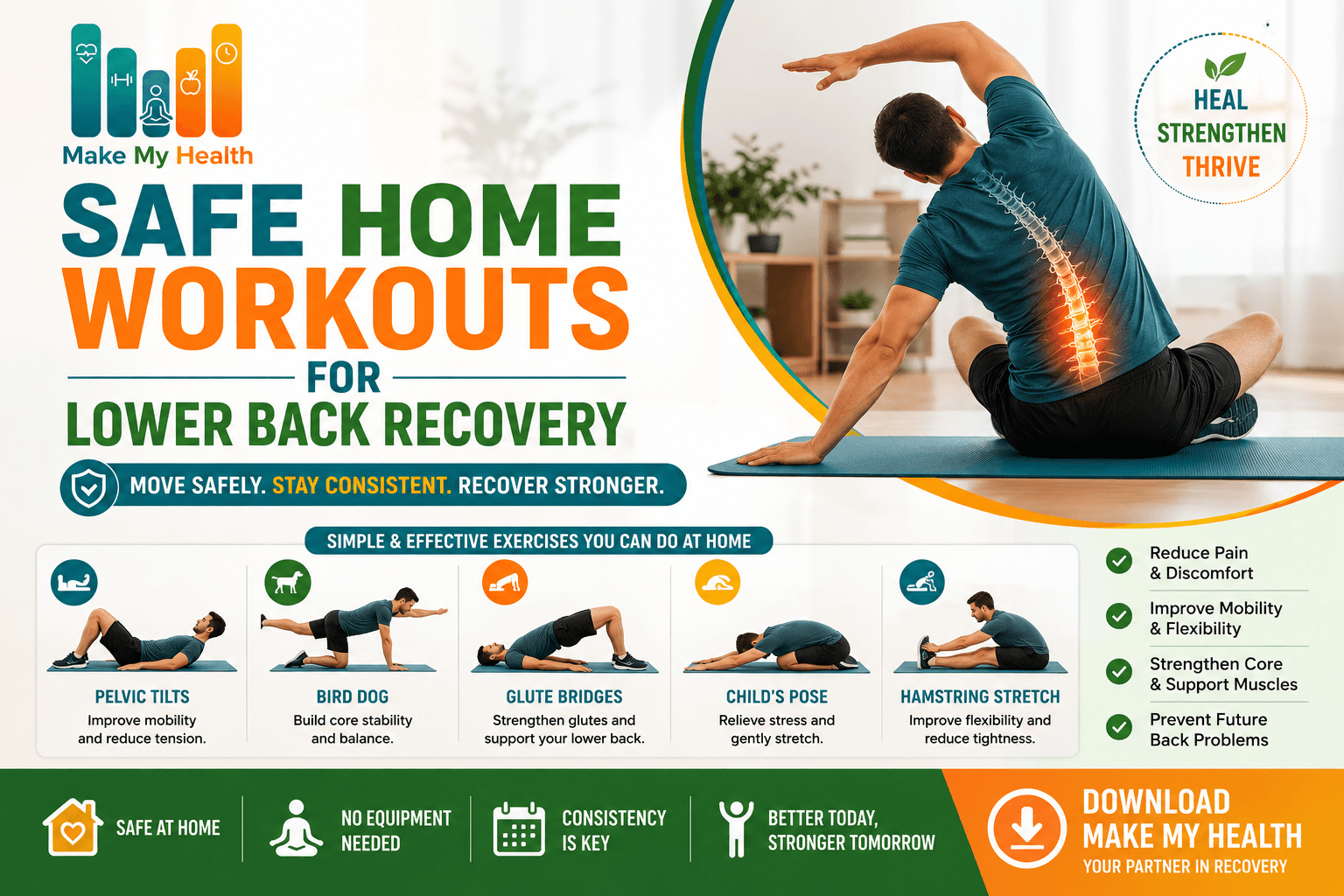
Safe Home Workouts for Lower Back Recovery
DisclaimerThis article is for general educational purposes and is not a substitute for professional medical advice, diagnosis, or treatment. Always consult a qualified healthcare provider for guidance specific to your condition.
Is your lower back pain holding you back? Discover the exercises and lifestyle changes that could set you free.
Understanding Lower Back Pain
Let's face it: lower back pain is a real pain in the... well, back! It's a widespread issue that millions of people worldwide grapple with daily. Whether it stems from poor posture, a sedentary lifestyle, or an injury, pinpointing the root cause is crucial. Is it a sneaky herniated disc, an annoying muscle strain, or maybe spinal stenosis? Each of these culprits demands a unique recovery strategy. Understanding these distinctions isn't just about playing doctor; it's about empowering yourself to choose the right exercises and steer clear of those that might make things worse.
The Amazing Benefits of Exercise for Lower Back Recovery
Exercise is like a superpower for those recovering from lower back pain. It’s not just about short-term relief, it's about building a bulletproof back for the future. Regular exercise can transform the muscles that support your spine into a fortress, boost your flexibility, and perfect your posture. These benefits work together to slash the risk of future injuries. Plus, getting your blood pumping delivers essential nutrients to the affected area, turbocharging the healing process.
Safe Home Exercises
While exercise is invaluable, picking the right ones is key, especially for lower back recovery. Here are some gentle yet powerful exercises to try at home:
1. Pelvic Tilts
Pelvic tilts are a fantastic way to gently mobilize your spine and engage those core muscles. Here's how to do them:
- Step 1: Lie on your back with your knees bent and feet flat on the floor.
- Step 2: Tighten your abdominal muscles and press your back into the floor.
- Step 3: Hold for a few seconds, then release. Aim for 10-15 reps.
This simple move helps reduce stiffness and can easily become part of your daily routine.
2. Cat-Cow Stretch
Channel your inner yogi with the Cat-Cow stretch, which enhances flexibility and eases back tension:
- Step 1: Begin on your hands and knees in a tabletop position.
- Step 2: Inhale, arch your back, and lift your head and tailbone (Cow position).
- Step 3: Exhale, round your back, and tuck your chin to your chest (Cat position).
- Step 4: Repeat for 5-10 breaths.
This flowy movement promotes spinal flexibility and melts away muscle tension.
3. Bird-Dog Exercise
The Bird-Dog exercise is your go-to for strengthening the lower back and improving balance:
- Step 1: Start on your hands and knees.
- Step 2: Extend your right arm forward and your left leg back.
- Step 3: Hold for a few seconds, then switch sides.
- Step 4: Shoot for 8-12 reps on each side.
This move is a winner for enhancing core stability and kicking back pain to the curb.
4. Bridge Exercise
Meet the Bridge exercise: a powerhouse move that targets the glutes, lower back, and abs:
- Step 1: Lie on your back with knees bent and feet hip-width apart.
- Step 2: Lift your hips towards the ceiling, keeping your shoulders grounded.
- Step 3: Hold for a few seconds before lowering. Repeat 10-15 times.
It not only strengthens the lower back but also boosts hip stability.
5. Wall Sits
Wall sits are perfect for building lower body strength without putting strain on your back:
- Step 1: Stand with your back against a wall and feet shoulder-width apart.
- Step 2: Slide down into a sitting position with your back flat against the wall.
- Step 3: Hold for 20-30 seconds, gradually increasing time as you get stronger.
These engage your quadriceps and core, indirectly supporting your lower back.
Precautions and Tips
When it comes to exercising for lower back recovery, caution is your best friend. Here are some tips to keep things safe and effective:
- Listen to Your Body: If an exercise hurts, stop right away. Pain is your body's way of saying, "Hold up!"
- Start Slow: Ramp up the intensity and duration of exercises gradually to avoid overexertion.
- Maintain Proper Form: Good technique isn’t just for show—it's crucial for preventing injury and maximizing benefits.
- Consult a Professional: Before diving into any exercise routine, especially if you have pre-existing conditions, get some advice from a healthcare provider or physical therapist.
- Consistency is Key: Regular practice, rather than sporadic bursts of effort, will bring the best results over time.
Tracking Progress
Keeping tabs on your progress is vital on the road to lower back recovery. Here's how you can track improvements:
- Pain Levels: Keep a diary of your pain levels before and after exercises to spot patterns and improvements.
- Range of Motion: Note changes in flexibility and mobility, especially in movements that were tricky before.
- Strength Gains: Record the number of reps or duration of exercises over time to measure your strength gains.
Creating a Home Workout Plan
A well-structured plan can supercharge your recovery efforts. Here's a sample weekly plan for those on the mend from lower back pain:
| Day | Exercise | Repetitions/Sets |
|---|---|---|
| Monday | Pelvic Tilts, Cat-Cow | 10 reps, 5-10 breaths |
| Tuesday | Bird-Dog, Bridge | 8-12 reps, 10-15 reps |
| Wednesday | Rest or gentle walking | - |
| Thursday | Wall Sits, Pelvic Tilts | 20-30 sec, 10 reps |
| Friday | Cat-Cow, Bridge | 5-10 breaths, 10-15 reps |
| Saturday | Bird-Dog, Wall Sits | 8-12 reps, 20-30 sec |
| Sunday | Rest or light stretching | - |
Feel free to tweak the plan based on your progress and comfort levels. As you get stronger and more flexible, you can introduce additional exercises with professional guidance.
The Power of Lifestyle Modifications
Exercise is fantastic, but lifestyle changes are the secret sauce to recovery. Here are some things to consider:
- Ergonomics: Make sure your workstation, especially if you're working from home, is ergonomic to prevent strain.
- Posture: Keep an eye on your posture throughout the day—whether you're sitting, standing, or strutting your stuff.
- Diet and Hydration: Good nutrition and staying hydrated are key to muscle recovery and overall health.
- Stress Management: Stress can crank up muscle tension, so consider incorporating mindfulness or meditation practices.
By weaving these elements into your daily life, you'll boost the effectiveness of your exercise regimen and pave the way for a more comprehensive recovery journey.
Conclusion:
Lower back pain can be a debilitating condition, but with the right understanding and approach, recovery is achievable. By incorporating safe and effective exercises like pelvic tilts, cat-cow stretches, and wall sits, individuals can strengthen their core, improve flexibility, and reduce the risk of future injuries. It's crucial to listen to your body, maintain proper form, and consult professionals when necessary. Alongside exercise, adopting lifestyle modifications such as ergonomic setups, good posture, and proper nutrition can enhance recovery efforts, leading to a more holistic healing process.
FAQ:
-
What causes lower back pain?
Lower back pain can result from poor posture, sedentary lifestyles, injury, herniated discs, muscle strains, or spinal stenosis. -
Which exercises are safe for lower back recovery?
Safe exercises include pelvic tilts, cat-cow stretches, bird-dog exercises, bridge exercises, and wall sits, all of which help strengthen the back without causing strain. -
What are some tips for exercising safely with lower back pain?
Listen to your body, start slow, maintain proper form, and consult a healthcare professional before beginning any exercise routine. Consistency and gradual progression are key to effective recovery.
Stay updated
Get new health articles on WhatsApp
By subscribing, you agree to receive health updates via WhatsApp. Unsubscribe anytime.