
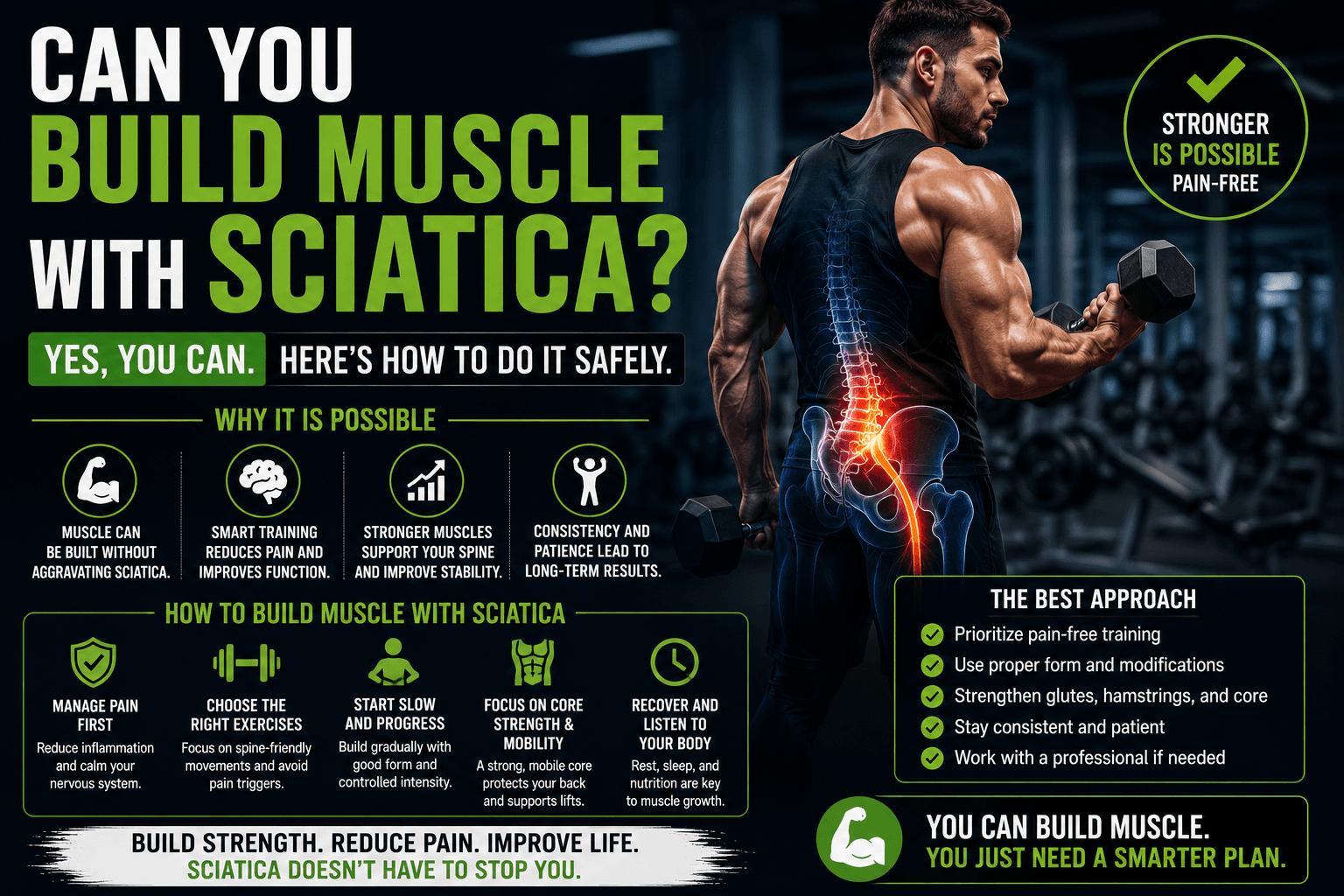
Can You Build Muscle With Sciatica?
DisclaimerThis article is for general educational purposes and is not a substitute for professional medical advice, diagnosis, or treatment. Always consult a qualified healthcare provider for guidance specific to your condition.
Understanding Sciatica
Sciatica isn’t just a fancy term; it's a condition that can bring about real agony. Imagine a sharp, shooting pain that travels from your lower back through your hips and buttocks, all the way down each leg. That's your sciatic nerve screaming for attention. This pain can range from mildly annoying to downright debilitating, often accompanied by numbness, tingling, or muscle weakness. The usual culprits? A herniated disk, a bony spur on your spine, or a narrowing of the spinal canal, known as spinal stenosis, all putting the squeeze on that nerve.
Causes and Symptoms of Sciatica
Sciatica doesn’t just pop up out of nowhere. It’s most commonly triggered by a herniated disk. Picture this: the soft, squishy center of a spinal disk pushes out through a tough outer layer and presses on the sciatic nerve. Other potential offenders include:
- Spinal Stenosis: The spinal canal narrowing, leaving less room for your nerves.
- Piriformis Syndrome: When the piriformis muscle decides to irritate the sciatic nerve.
- Degenerative Disc Disease: The slow breakdown of discs causing nerve pinching.
You might feel a sharp, shooting pain that can worsen with prolonged sitting or standing. Muscle weakness and a burning sensation in the leg or foot? Yep, they can tag along too.
Impact of Sciatica on Physical Activity
Living with sciatica can feel like you're trapped in a nightmare, with pain making even the simplest movements a challenge. But here's the twist: sitting still can make things worse. Staying active, albeit carefully, is crucial. With the right management, you can still exercise and even build muscle.
Building Muscle with Sciatica: Is It Possible?
Absolutely! Building muscle with sciatica isn’t just a pipe dream, but it does call for a smart, calculated approach. The key is recognizing your limits and tailoring your workouts to avoid aggravating the condition.
Importance of Exercise in Sciatica Management
Exercise can be a real game-changer when it comes to managing sciatica. Regular activity strengthens the muscles supporting your spine, boosts flexibility, and promotes overall spinal health. This can help alleviate pressure on the sciatic nerve, reducing that nasty pain.
Types of Exercises Recommended
Certain exercises can be your best friends when dealing with sciatica. Focus on moves that strengthen your core, enhance flexibility, and ease nerve irritation. Some recommendations include:
- Low-Impact Aerobic Activities: Like walking or swimming, which improve cardiovascular fitness without stressing your back.
- Core-Strengthening Exercises: Target those abs and lower back to give your spine the support it needs.
- Stretching Exercises: Hamstring stretches, for instance, can relieve tension in the muscles around the sciatic nerve.
Exercises to Avoid
Some exercises, though, are like the villains in this story. They can worsen your sciatica symptoms, so it's best to steer clear of:
- Heavy Squats: These can crank up the pressure on your spine.
- Running: Especially on hard surfaces, as it can jolt your spine.
- High-Intensity Interval Training (HIIT): Its high impact and intensity can be too much.
Developing a Safe Workout Plan
Crafting a workout plan that keeps you safe while dealing with sciatica is all about careful planning and often consulting with the pros.
Consulting with Healthcare Professionals
Before you dive into any exercise program, have a chat with a healthcare provider, like a physical therapist or a trained exercise physiologist. They can offer personalized advice tailored to your specific condition and needs.
Tailoring Exercises to Individual Needs
Your workout plan should fit you like a glove, accommodating your pain levels and physical capabilities. This might mean tweaking traditional exercises or dialing down the intensity and duration.
Importance of Listening to Your Body
Your body talks, so listen up. If an exercise brings pain, stop right away. Gradual progression in intensity and duration is your best bet to avoid making things worse.
Nutrition and Recovery
Building muscle isn’t just about what you do in the gym; nutrition and recovery are equally important pieces of the puzzle.
Role of Nutrition in Muscle Building
Fueling your body with a balanced diet rich in protein, healthy fats, and carbohydrates is key for muscle growth and repair. Protein, in particular, is crucial, as it provides the building blocks for muscle tissue.
Importance of Rest and Recovery
Rest isn’t just for the lazy; it’s crucial for muscle recovery and growth. Sleep and downtime allow your body to repair itself and reduce inflammation, which can help ease sciatica symptoms.
Monitoring Progress and Adjustments
Keeping an eye on your progress and tweaking your workout plan as needed is essential for managing sciatica and making gains.
Keeping Track of Pain Levels
Why not keep a journal? Tracking your pain levels and identifying any patterns or triggers can be super helpful. Share this info with your healthcare providers to adjust your treatment plans as needed.
Adjusting Exercises as Needed
As you get stronger and build endurance, you can tweak your exercises to gradually increase their difficulty. But remember, caution is the name of the game to avoid setbacks.
Celebrating Milestones
Celebrate those wins, big and small. Whether it's lifting heavier weights or feeling less pain, every milestone is a victory on your journey.
Conclusion
Building muscle with sciatica is a journey that requires patience, perseverance, and a strategic approach. With the right plan, proper guidance, and a little tenacity, you can achieve your muscle-building goals while managing your sciatica effectively.
Remember, your journey with sciatica and muscle-building is unique to you. Listen to your body, consult with professionals, and don’t be afraid to make adjustments along the way. Here’s to your health and strength!
Conclusion:
Sciatica can significantly impact daily life, but with the right approach, individuals can manage symptoms and even build muscle. A combination of targeted exercises, proper nutrition, and rest can alleviate pain and support muscle development. Consulting with healthcare professionals to develop a personalized and safe workout plan is crucial. Remember, listening to your body and making gradual adjustments are key to managing sciatica effectively.
CTA:
"Ready to take control of your sciatica? Download Make My Health and Consult with a healthcare provider today to develop a personalized exercise plan and start your journey towards improved mobility and strength."
FAQ:
-
Can exercise really help alleviate sciatica pain?
Yes, regular exercise can strengthen muscles supporting the spine, improve flexibility, and reduce nerve pressure, which can help alleviate sciatica pain. -
What types of exercises should I avoid with sciatica?
Avoid exercises that involve heavy lifting, twisting motions, or high impact, such as heavy squats, running on hard surfaces, and high-intensity interval training (HIIT). -
How important is nutrition in managing sciatica and building muscle?
Nutrition plays a crucial role. A balanced diet rich in protein supports muscle growth and repair, which is essential for managing sciatica and building muscle effectively.
Stay updated
Get new health articles on WhatsApp
By subscribing, you agree to receive health updates via WhatsApp. Unsubscribe anytime.